
Years ago my former roommate reserved the Truman Library’s special room for her wedding reception. Somehow, between making the reception reservation and the wedding, renovations of her spot took place. Wanting to honor their agreement, the folks at the Truman Library opened the museum for everyone to see. We had the reception in the lobby area, and I truly enjoyed it. That was the first and last time I toured the Library…until last weekend.
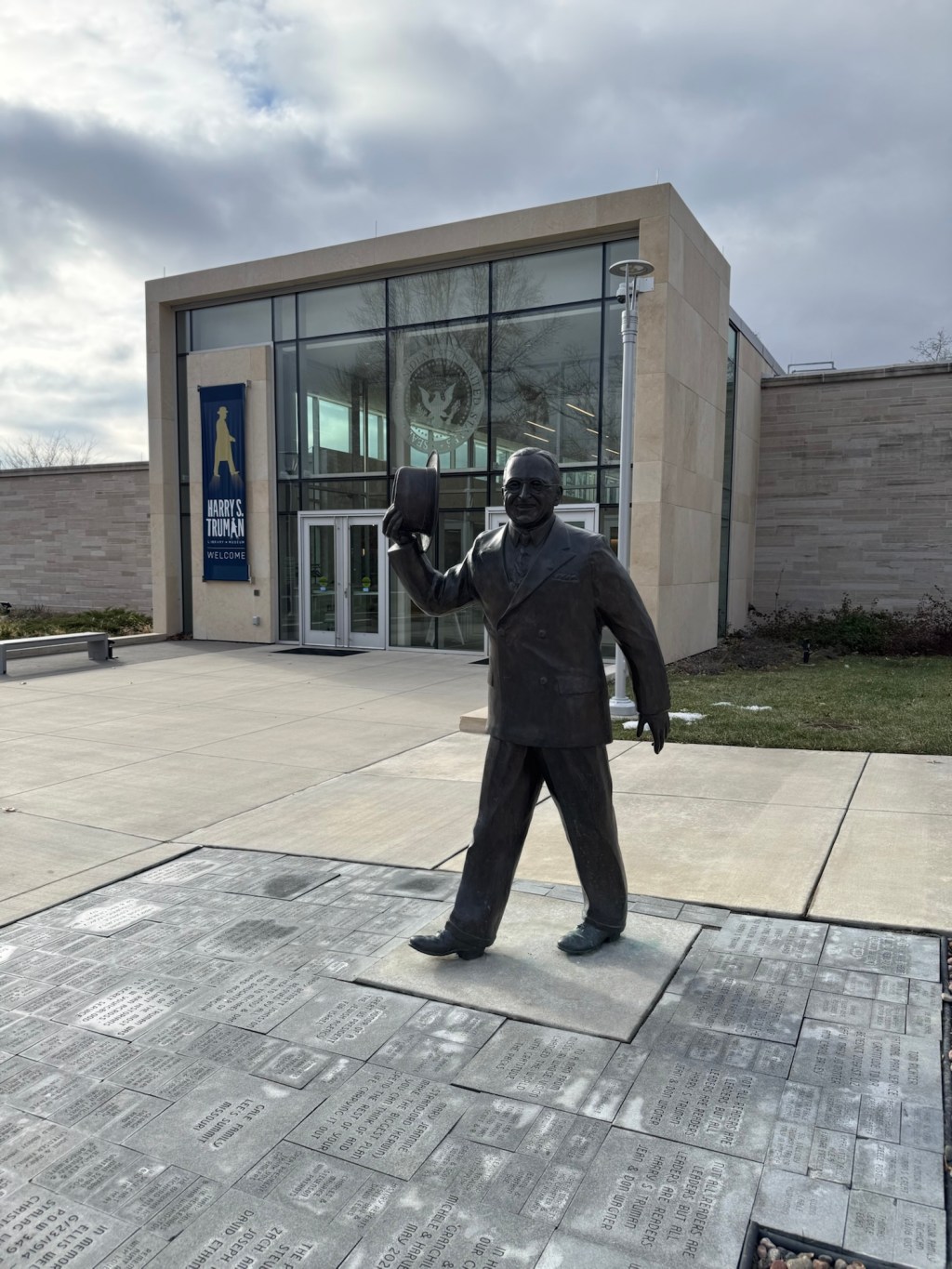
Seeing as my roommate married in 2001, the Truman Library once again went through major renovations. The biggest external change of this $29 million renovation occurred when the visitor’s entrance moved to the east side of the building with Harry’s statue happily greeting those who look forward to a tour of history.
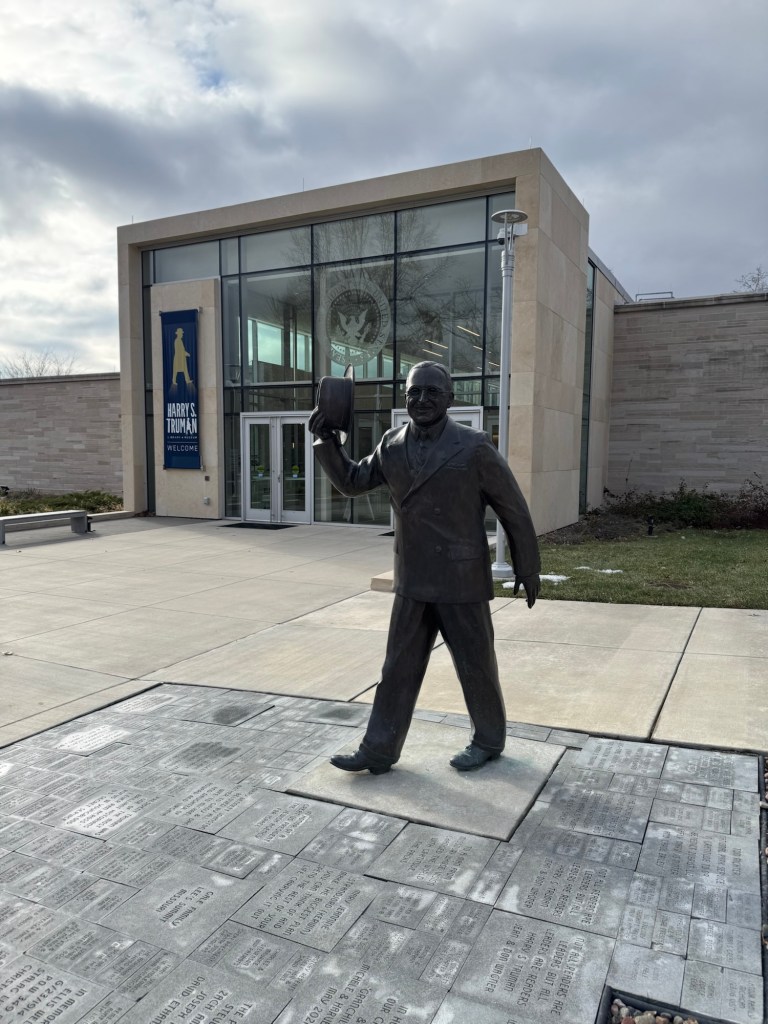
FYI…If you live in the area, the Mid-Continent Public Library has a four person pass that allows free entrance. You can check it out for a week and use it once per checkout. Otherwise, ticketing takes place inside these doors.

If you are looking for Harry’s personal life, visit the home. The library touches on those themes, but mostly it explores his transformation from a farmer to the President of the United States.
Harry Truman took risks. Financially, many of those risks failed. His name became linked with the Pendergast machine as well, but many believe Truman still stood on his beliefs and values. At one time Harry Truman was ranked in the top 5 when comparing the other Presidents. Currently, if you Google it, he is within the top ten.
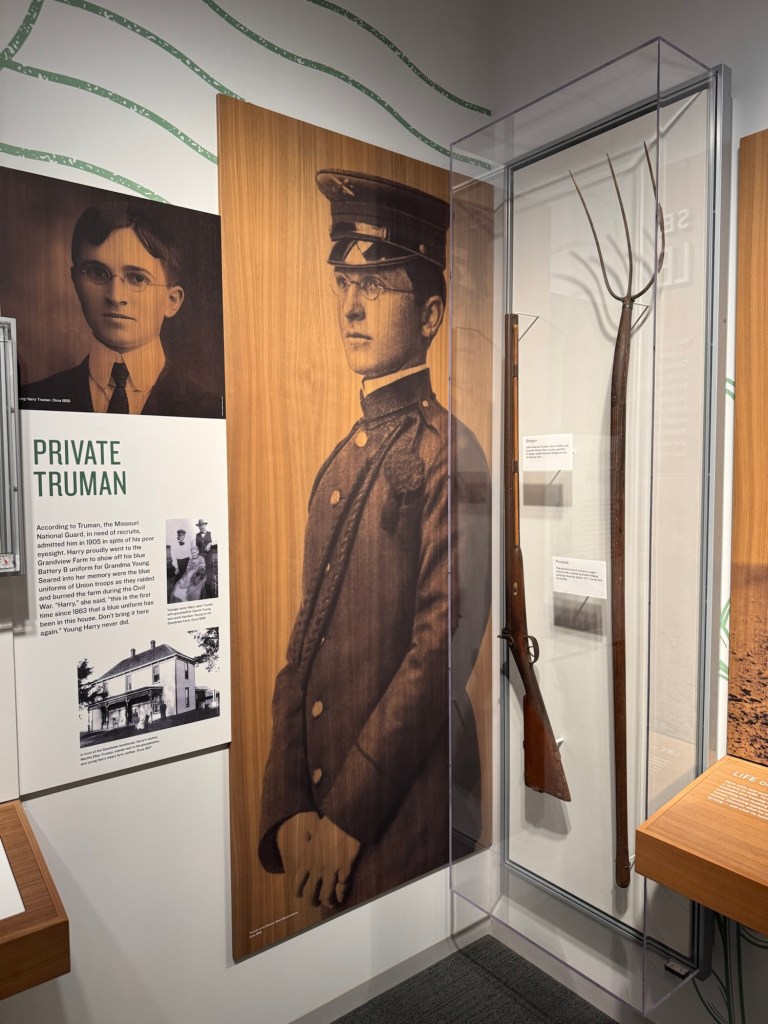
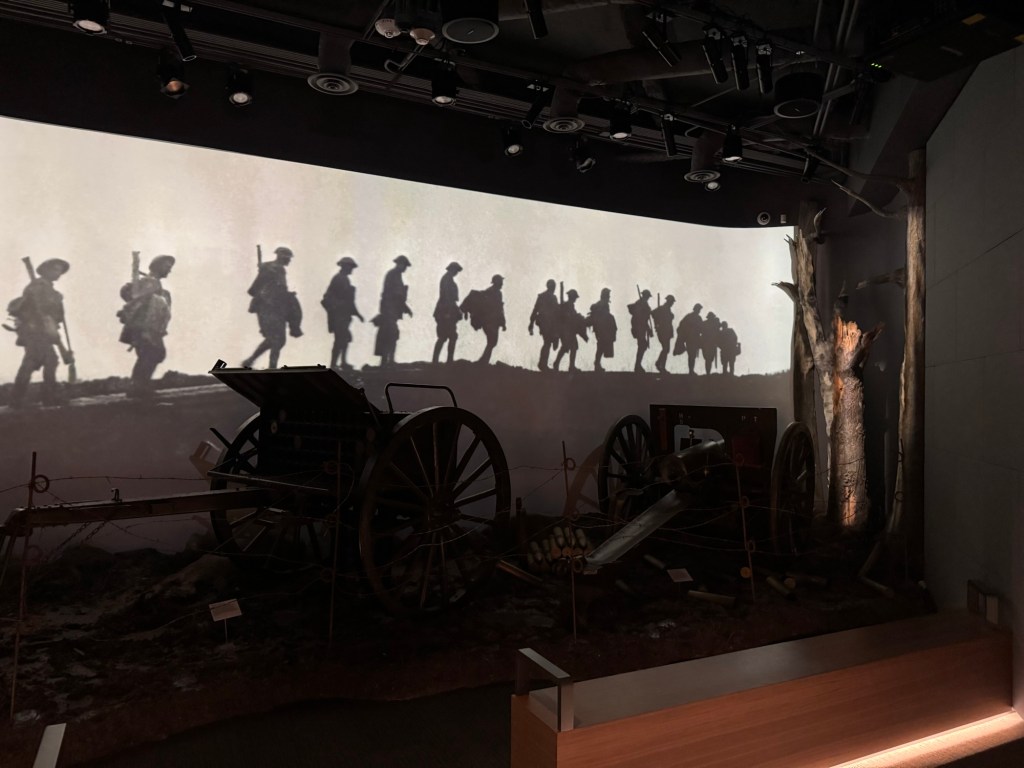
In 1905, at the age of 21, Truman joined the National Guard. They accepted him despite his terrible eyesight. He was so excited to show his family the uniform, but when he returned to the Farm Home in Grandview, he upset his Grandmother Young. Apparently the Union soldiers destroyed their farm during the Civil War (wearing similar blue uniforms), and she told him never to bring that uniform home again as it reminded her of that time.
When I read that information, I was struck by how close history is to us. Truman, born in 1884, had a grandmother who was living during the Civil War, and I was born prior to Harry Truman’s death in 1972. Think for a moment about those who have been in your life. What have their ancestors seen that seem so far away to you? I know as a teacher my students can’t believe I lived through September 11, 2001. It’s hard for me to imagine my grandparents were alive during World War I.
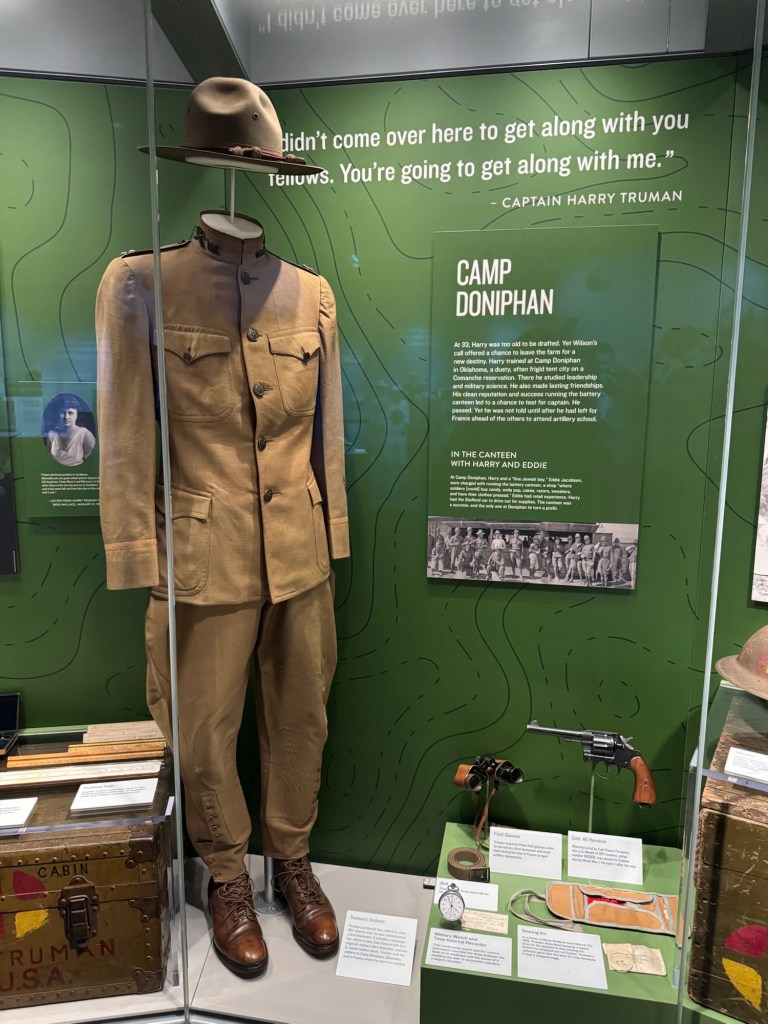
Returning to Harry, at 33 he enlisted in the army and began studying leadership and military science. He and his friend Eddie Jacobson ran the battery canteen so well that Truman advanced to captain by the time he deployed to France.
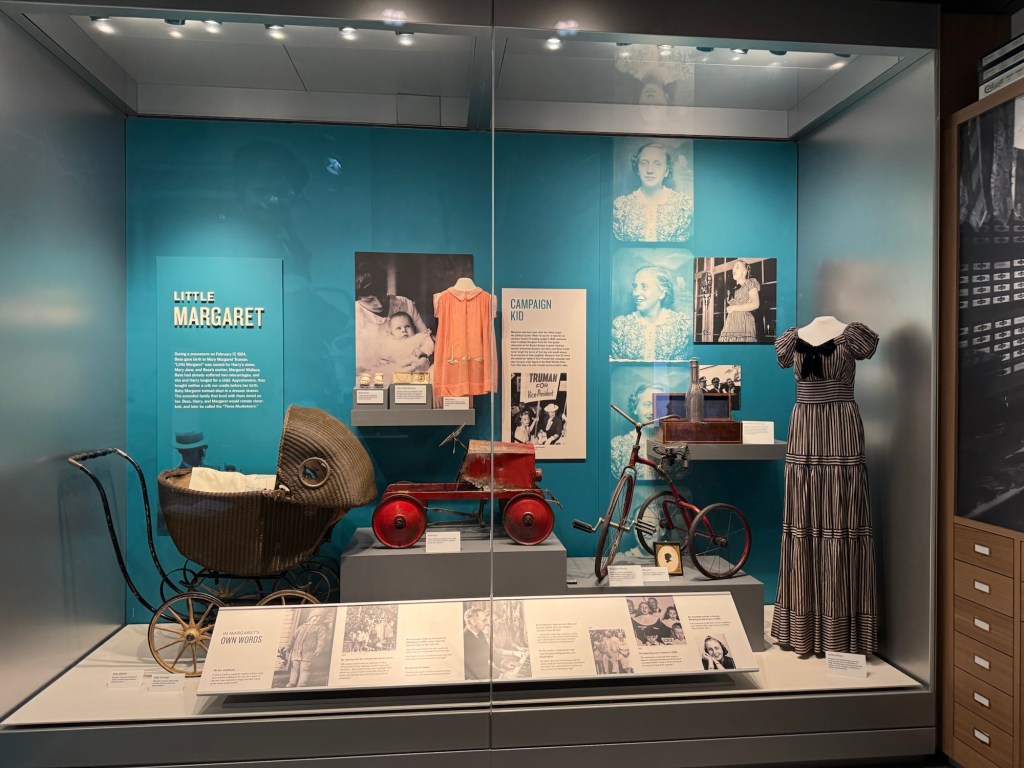
Upon his return, Harry Truman married Bess Wallace at the age of 35. He and his friend Eddie Jacobson began a haberdashery, aka men’s clothing store. The store closed after three years, so Truman switched careers and became a county judge. During this time Bess and Harry had their only child, Margaret.
In 1935 Truman won a U.S. Senate seat which he held until becoming Vice President of the United States under Franklin Delano Roosevelt in January 1945.
Truman was not FDR’s first choice for Vice President during his fourth term as President. A man named Henry Wallace was. However, the Democratic Party knew how sick Roosevelt was and convinced Roosevelt to switch his running mate to Truman because he was more widely accepted by both conservative and liberal democrats. They felt Roosevelt might die in office, so they wanted a party unifier. Truman became that man.
Eighty two days after becoming Vice President, Harry Truman was thrust into the Presidency. While he accepted the role, many surprises awaited him. The first being the atomic bomb.
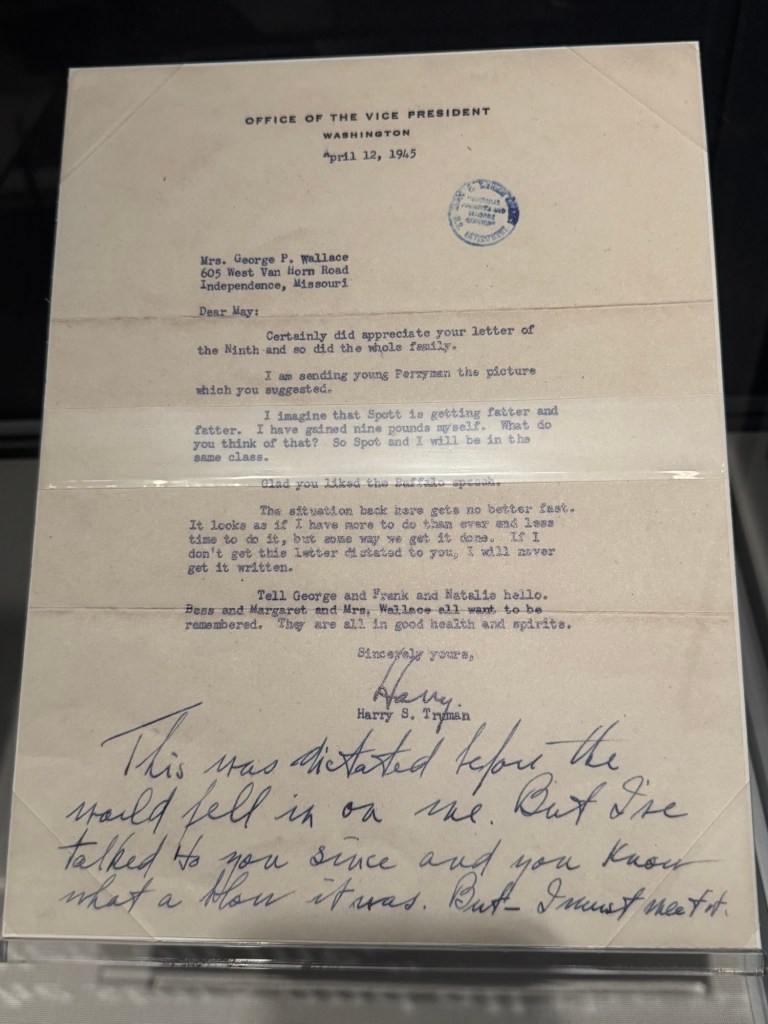
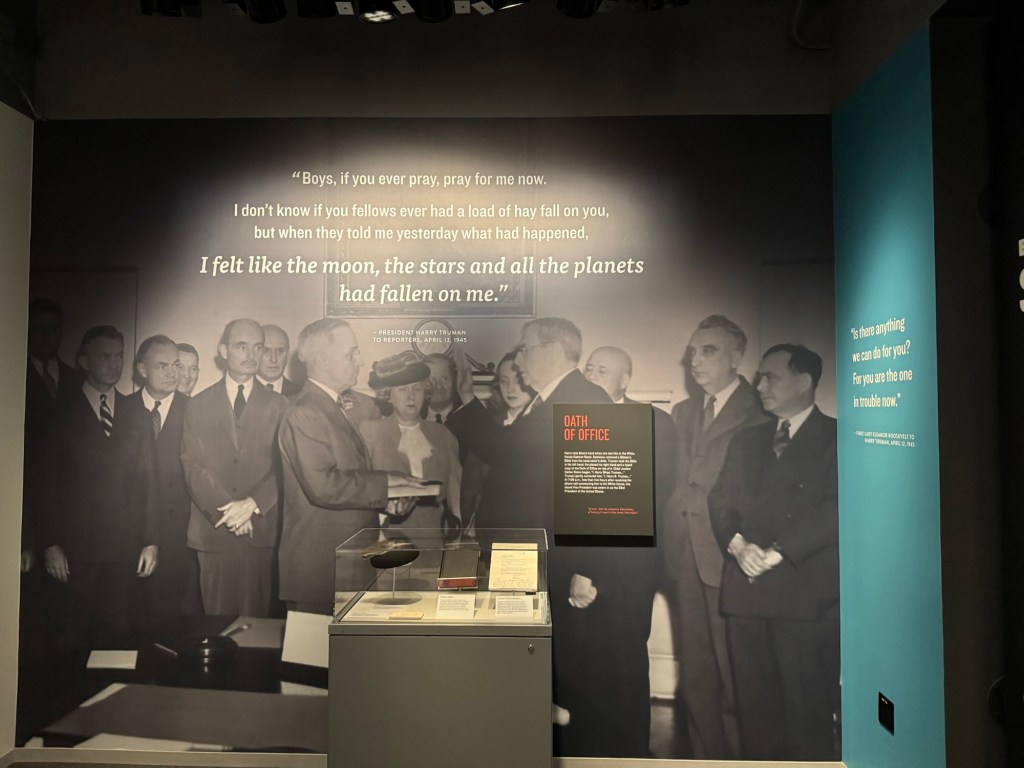
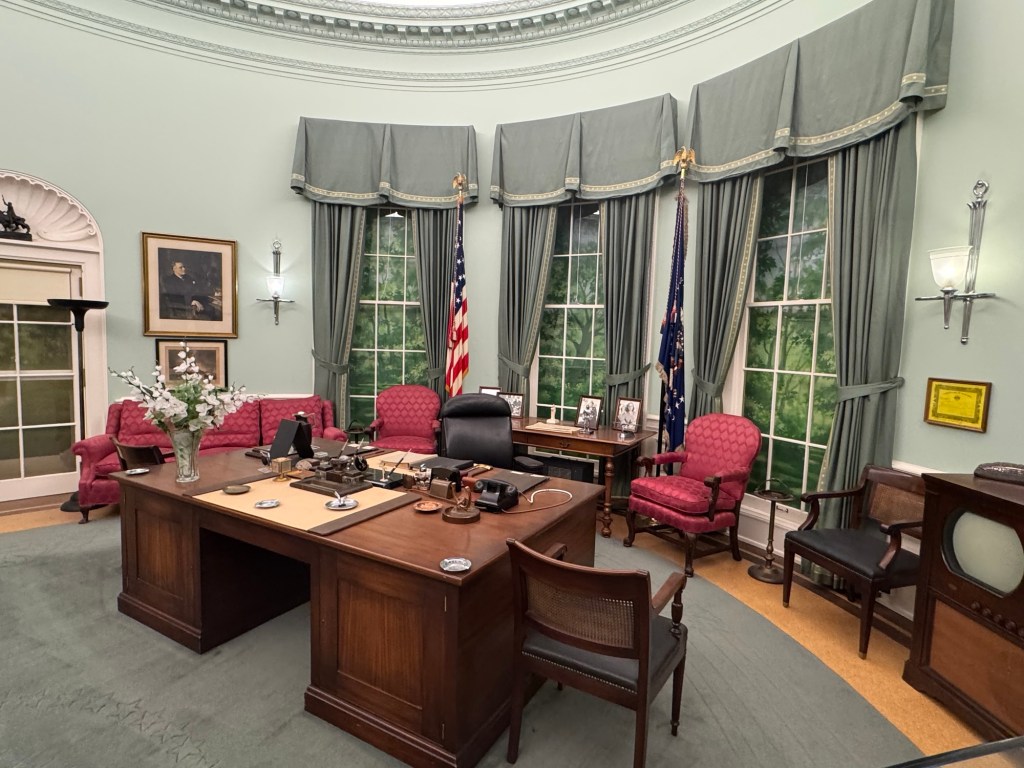
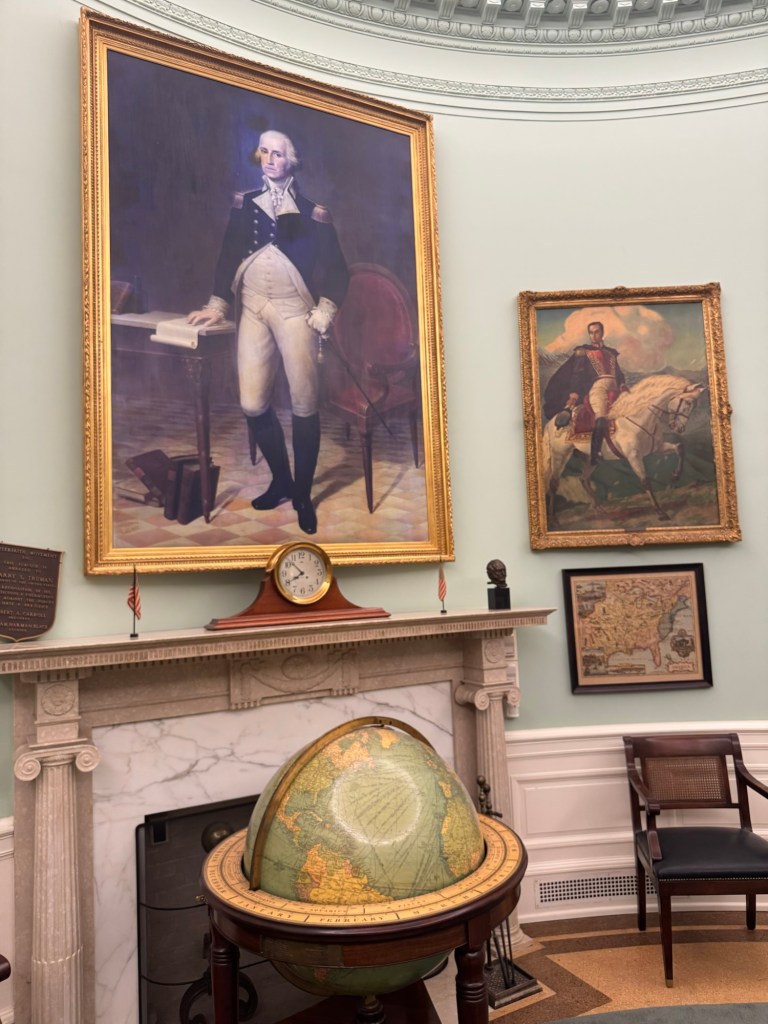
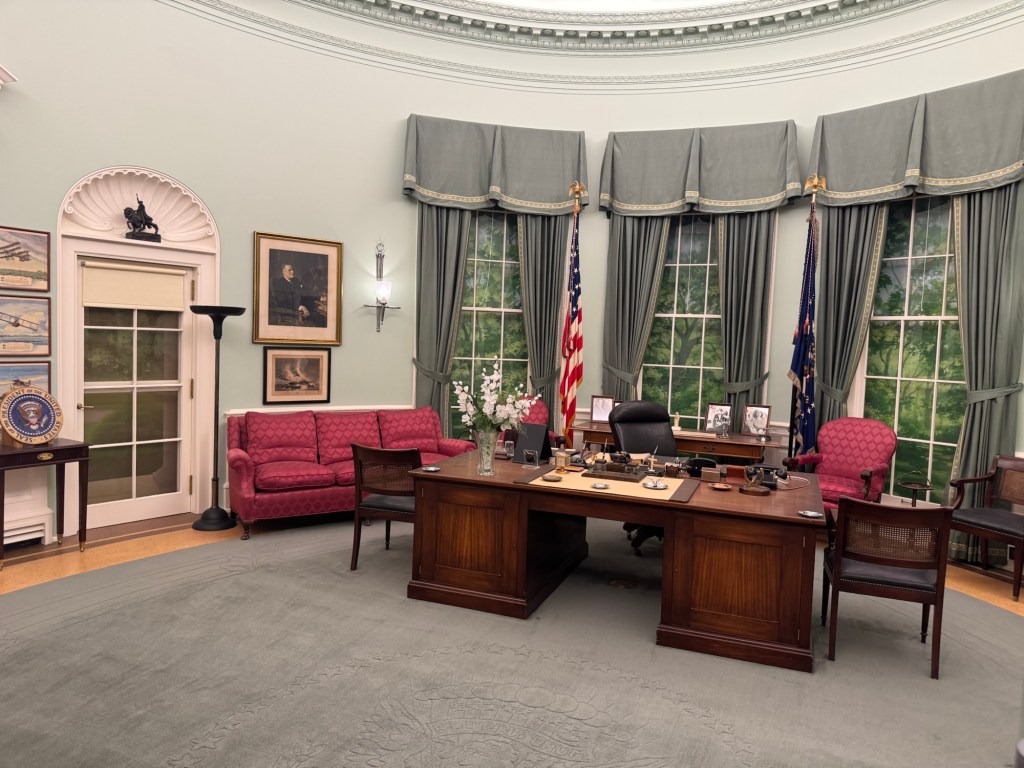
No one told Truman about the Manhattan Project until the day after he became President in 1945. Roosevelt received a letter from Albert Einstein in 1939 about a potential for a German atomic bomb, so he authorized the study and development of one for the U.S. Then, 116 days after taking the oath of office, Harry Truman authorized its use.
The effects were traumatizing. The library presents both sides. There’s even a journal where visitors share their thoughts on this incredibly difficult decision. As I read through the writings of others, I was touched by the authors’ thoughtful comments. There were responses of people living through that time as well as responses written by children just learning of the devastating event.
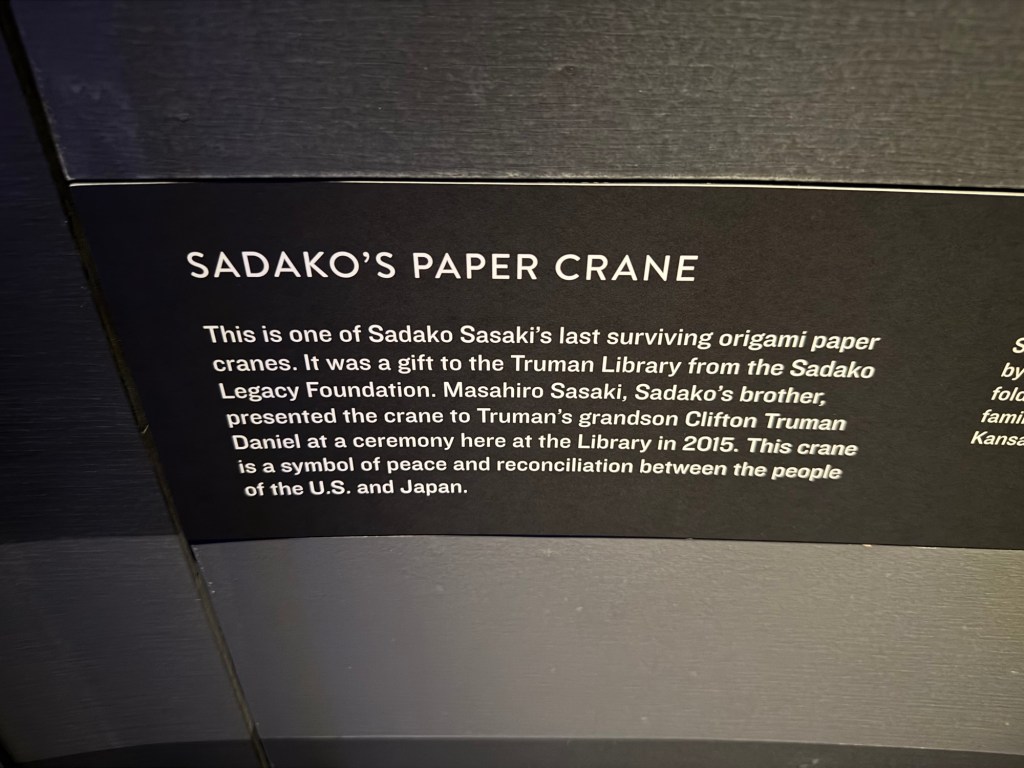
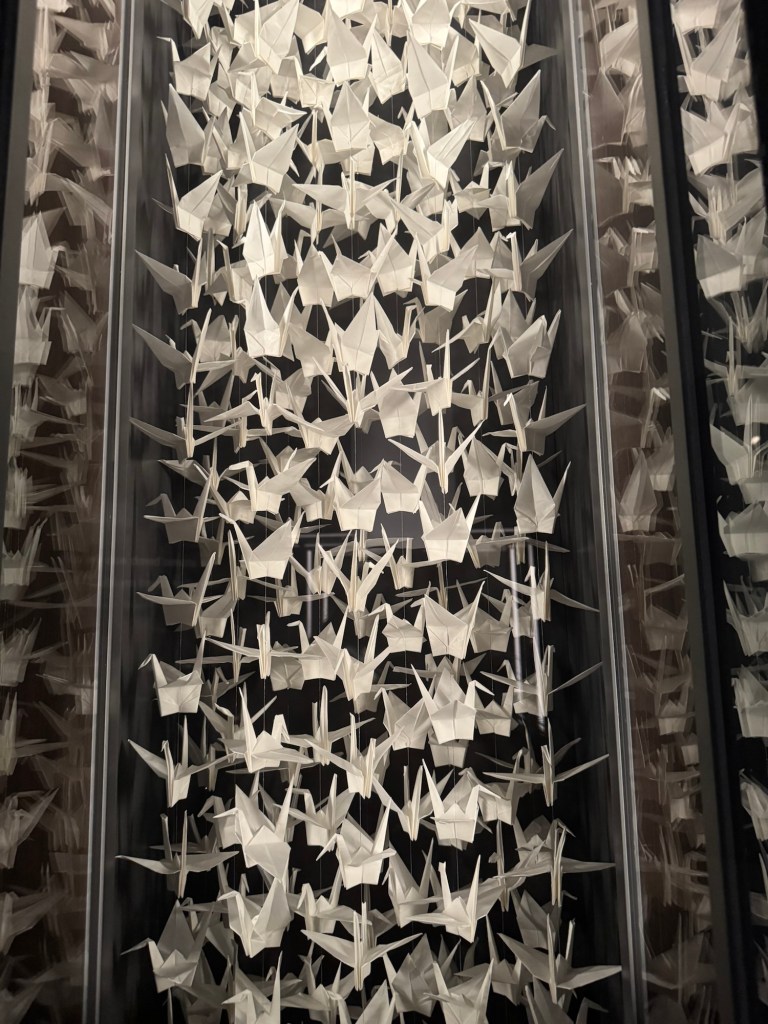
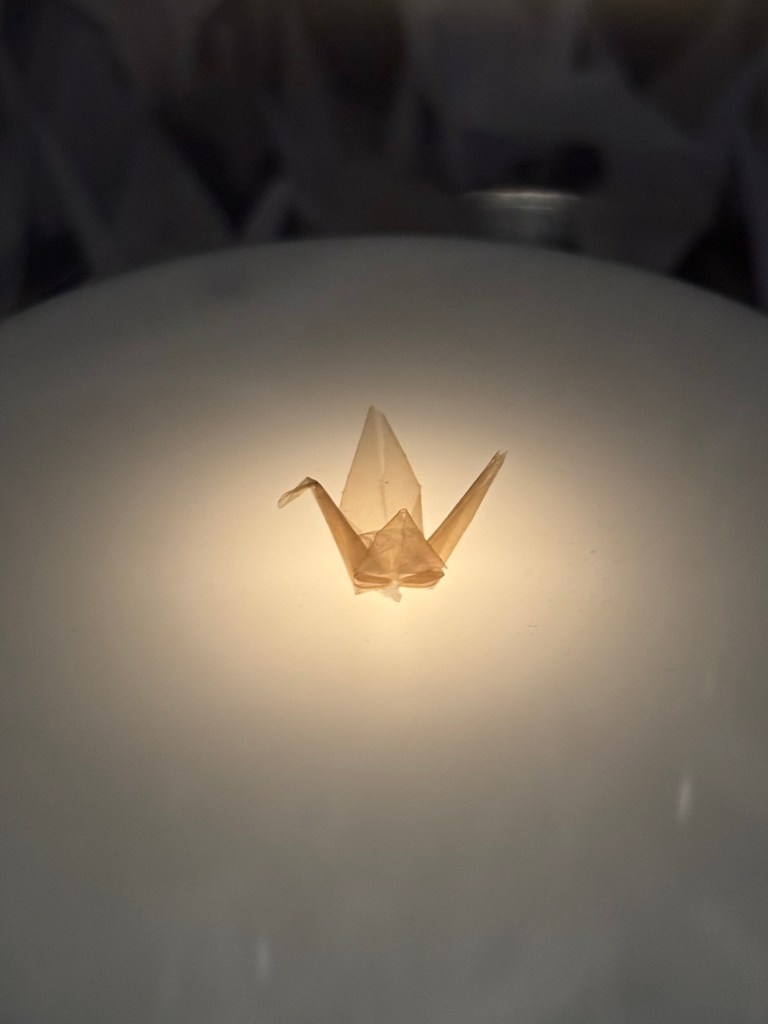
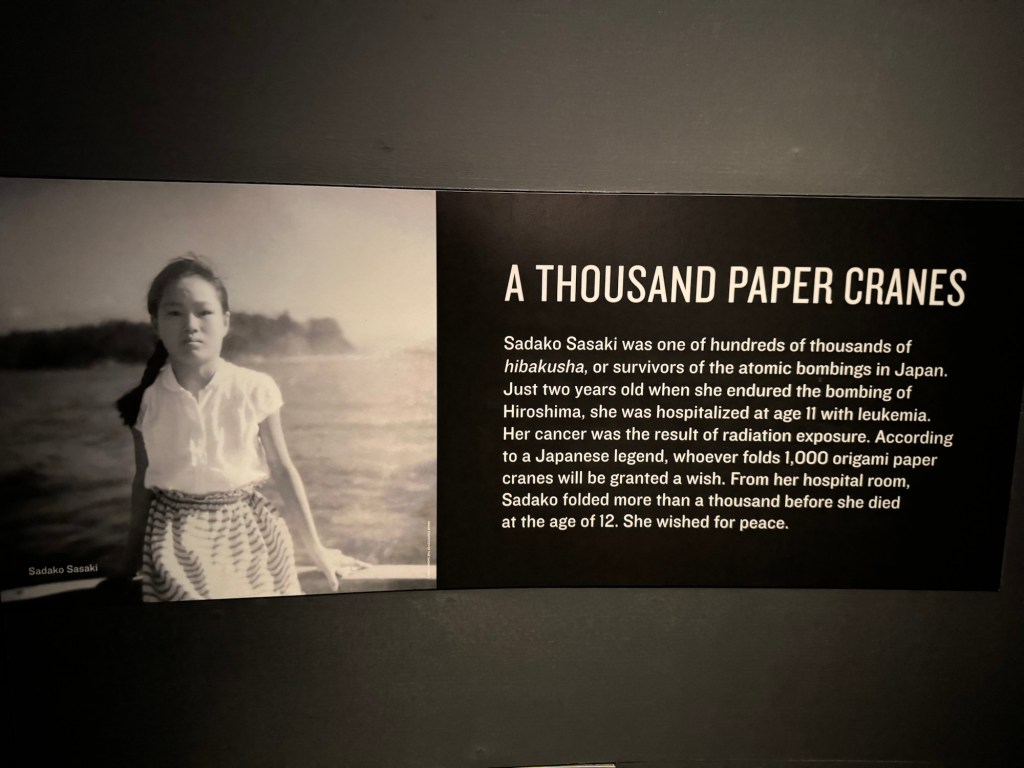
I once attended a conference whose keynote speaker was a woman who lived in Japan on the day of the bombing. To hear her story of pain, loss, and healing touched me deep within my soul. I still carry some of her thoughts and stories with me.
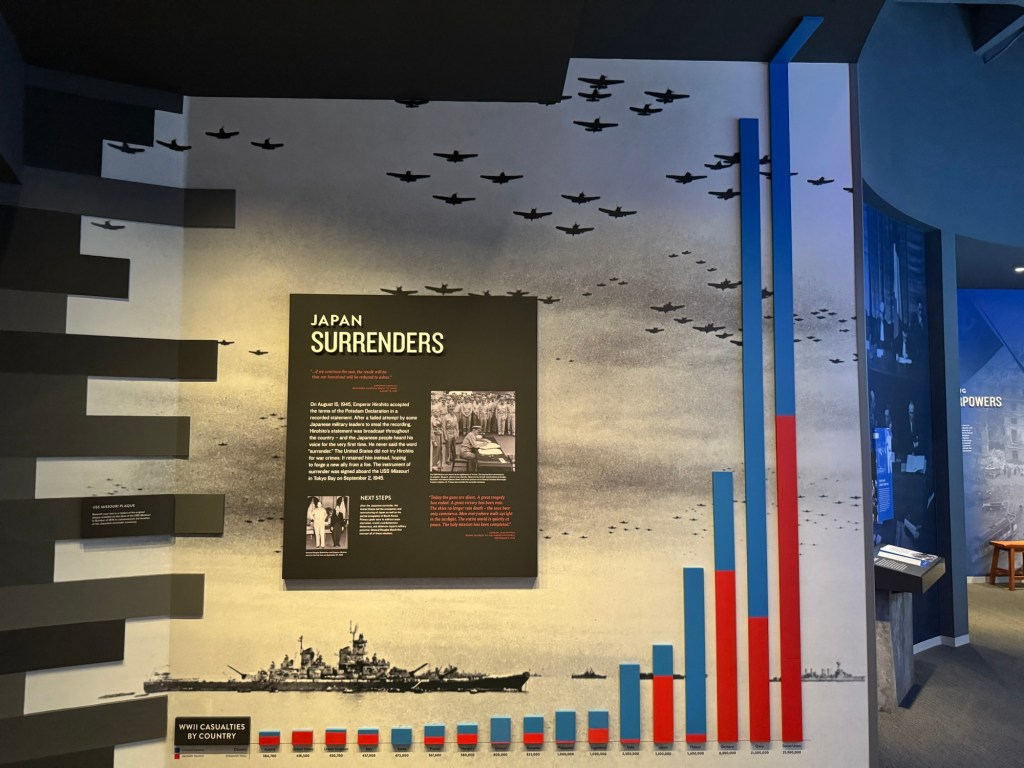
After the bombing, the war drew to a close—Japan surrendered on September 2, 1945. The most surprising statistic to me included the numbers of lives lost. Which country sacrificed the most people? Russia…with 23,900,000 people. China, too, lost 21,000,000 people. Looking at the photo above, you’ll see the red portion of the bar graph (military), and the blue portion (civilian) combine to provide the total number of lives lost per country.
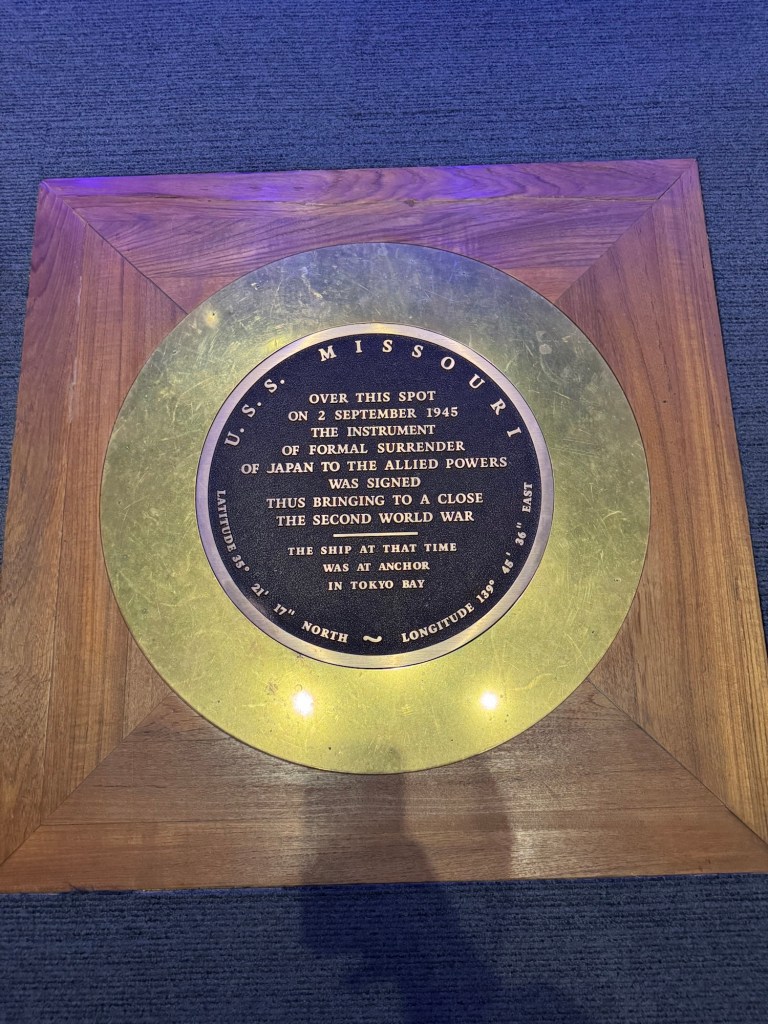
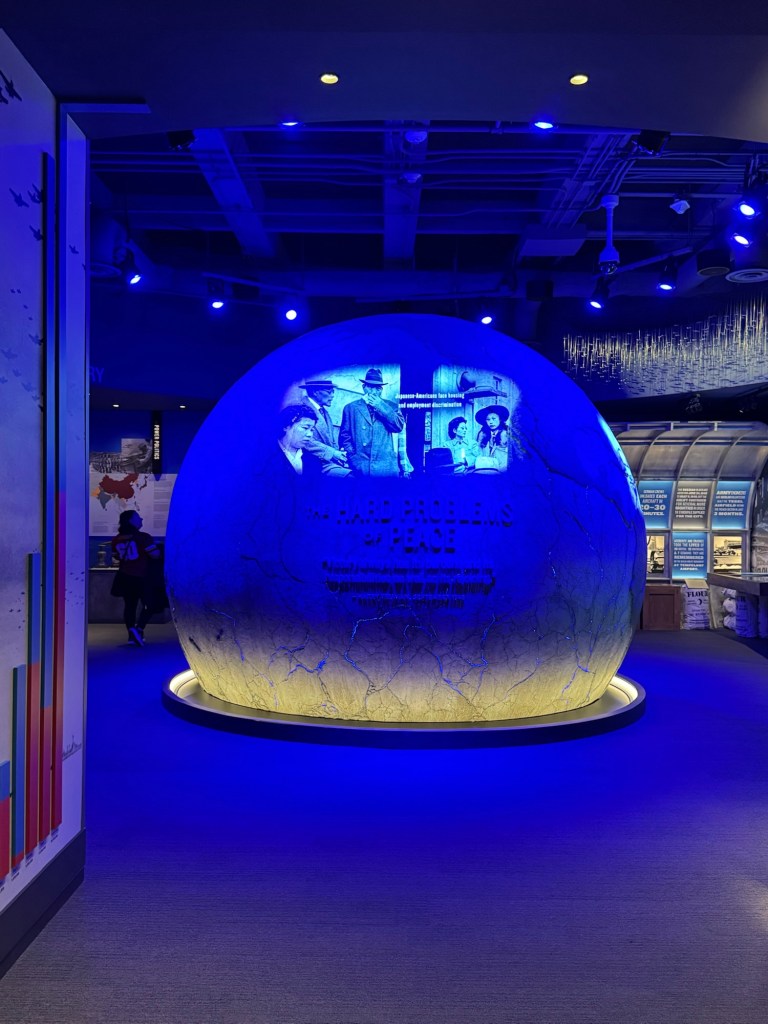
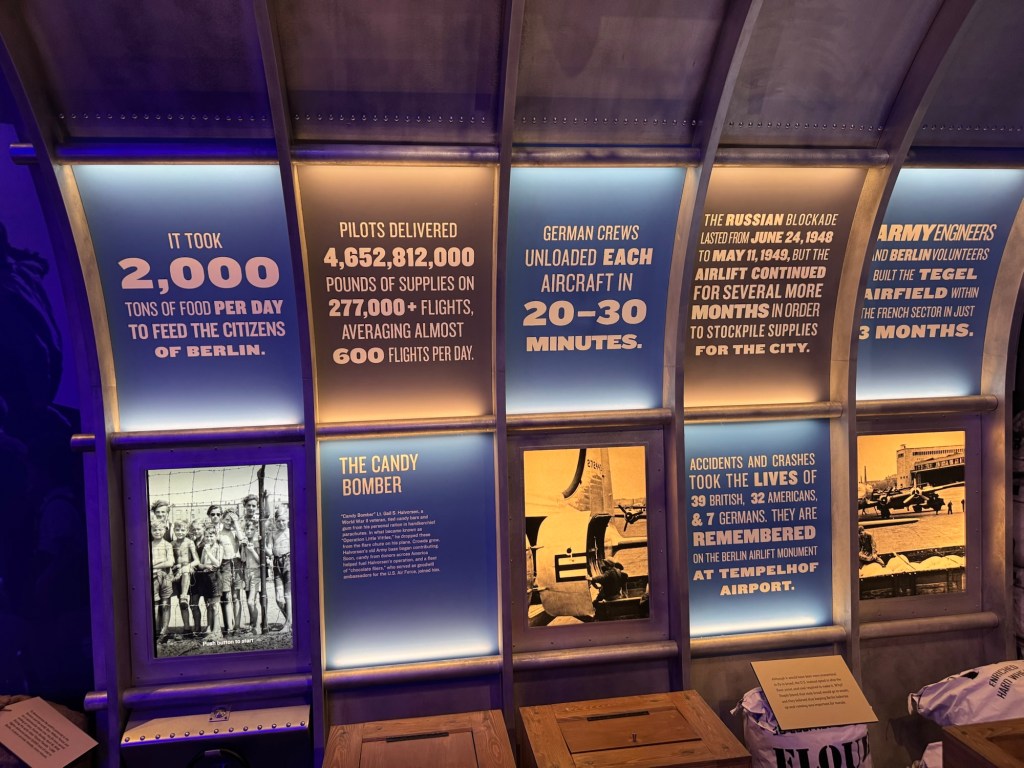
The Truman Library shows how Truman had to continue making tough decisions. East and West Germany separated at this time, and Truman had to commit to flying planes over the “enemy” airspace to provide food for the people. Truman also had to make decisions regarding Jewish settlements in Israel, declaring Israel as a state. He also had to help Korea establish their ever-changing border between North and South Korea.
And eventually, Truman returned home to Independence. He stayed for Eisenhower’s inauguration then caught a train home, where he reentered the role of private citizen.
Truman then worked on his memoir, but he also spent the majority of his time with Bess as well as overseeing the construction of his library—.8 miles from his home. While Truman found himself in the spotlight for many years, some of his favorite times included his return to life in Independence.
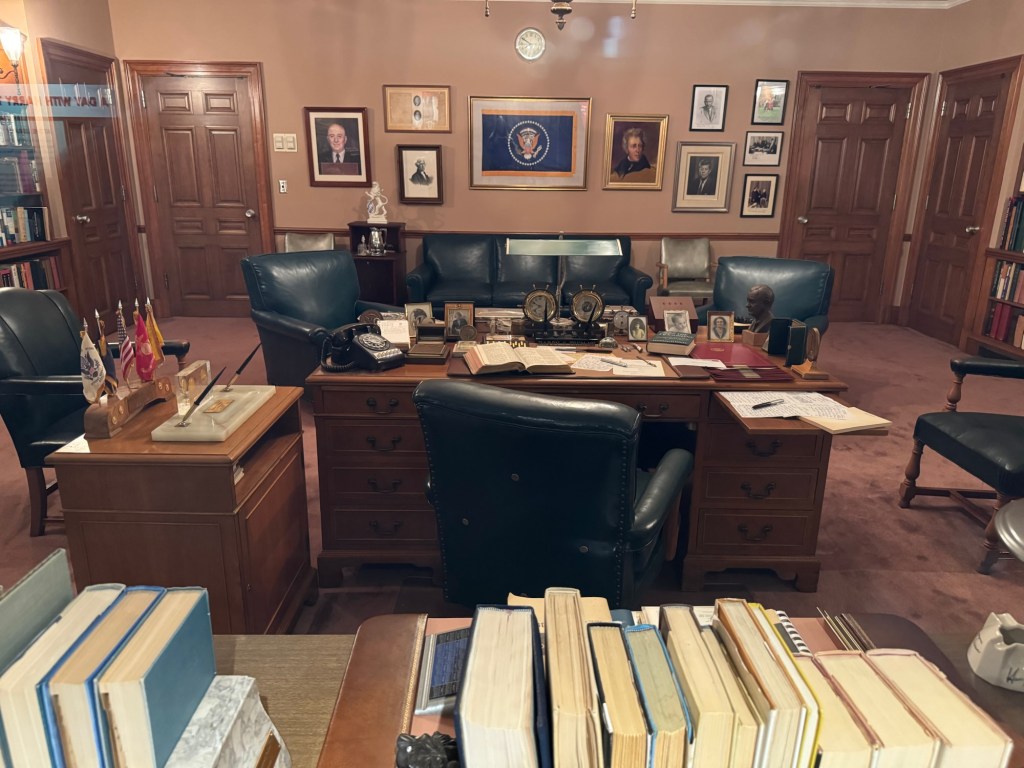
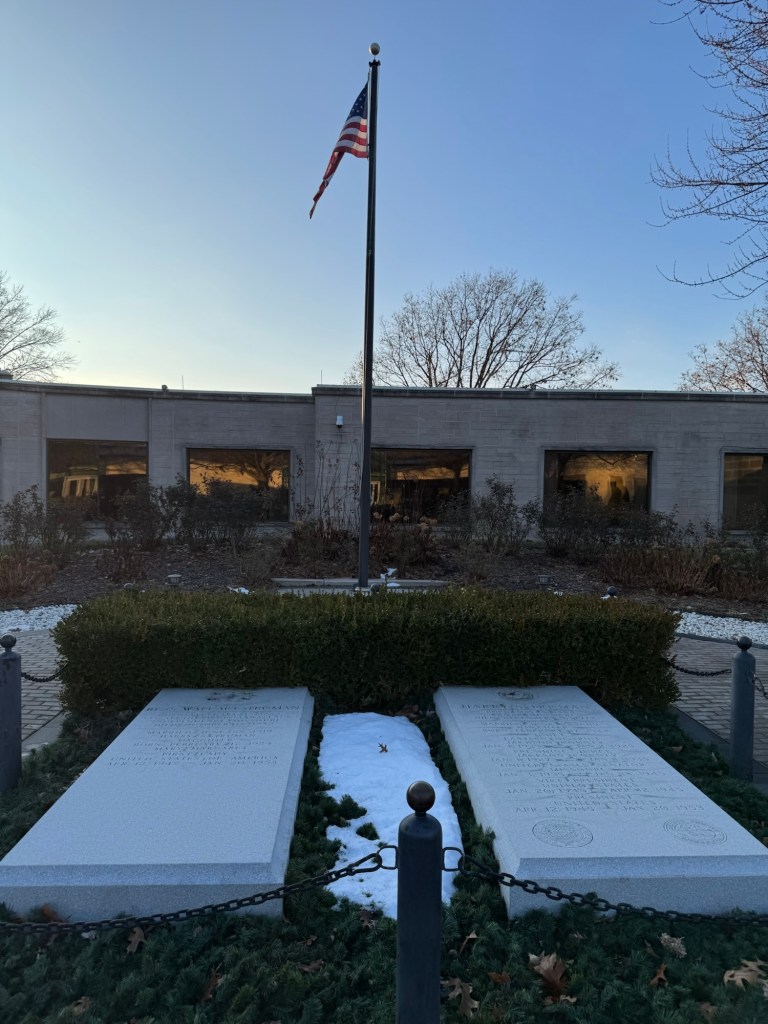
Harry S Truman, born in Lamar, Missouri on May 8, 1884, died at Research Medical Center in Kansas City, Missouri on December 26, 1972. He loved God and his family, and he made an oath to the people of the United States to defend and protect it. He performed his duty to the best of his ability using honesty and integrity as his compasses.
 Reba Roams the World
Leave a comment