
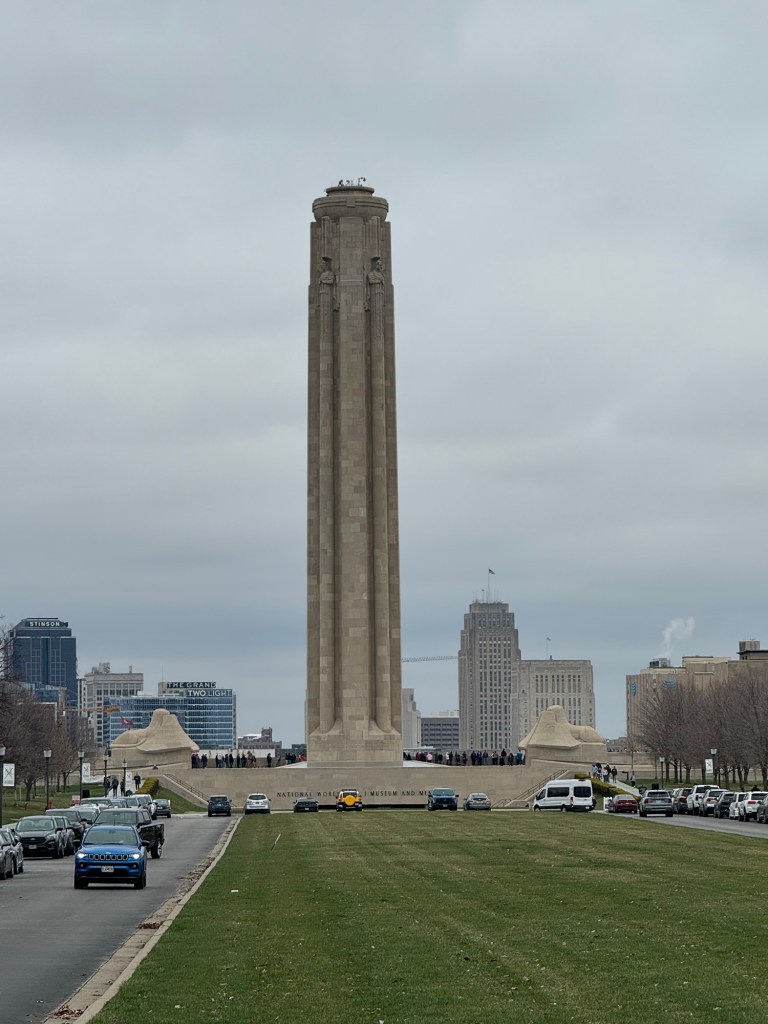
It has taken me a few days to prepare my thoughts for this writing. War is emotional. For some, war elicits great pride in their country’s heroic efforts. For others, war triggers fears that might not have ever been realized before. As I reflect on World War I, I feel sadness for the loss of life, reverence for those who sacrificed their safety for others, and a deep reflection on just how and why war starts.
I will never earn the title of “War Expert” or “Great Historian”, but visiting the National World War I Museum forced me to pause and consider the events of the past. I don’t think I’m alone when saying I don’t know much about the Great War. Sure, WWII themes readily come to mind, but I haven’t held on to the crux of problems from the early 1900s.
Thankfully, the museum provides exceptional videos and displays that help visitors gain a deeper understanding of the war. One theme that likely finds itself in the midst of most wars is power. People or countries always want the upper hand. If someone is seen to have a greater advantage, it doesn’t seem like much time will transpire before someone challenges that power. In the case of WWI, Britain (and France) had quite the power though it was labeled imperialism. These two countries not only formed an alliance, but they also controlled the seas and owned most of the colonies around the world. That created distrust and fear amongst the other countries; particularly Germany.
The other alliance, the Central Powers Alliance included Germany and Austria-Hungary. They promised to come to the other’s aid should another country attack them. Eventually the Ottoman Empire and Bulgaria joined as well. This alliance formed out of what was called the Triple Alliance where Germany, Austria, and Italy had allied together to protect against attack. Alliances changed however, and Italy joined forces with the Triple Entente (Britain, France, and Russia) during the war and rebranded themselves to Allied Powers.
With countries switching alliances to meet their needs, just let me say tension and conflict grew until the eventual breaking point occurred.
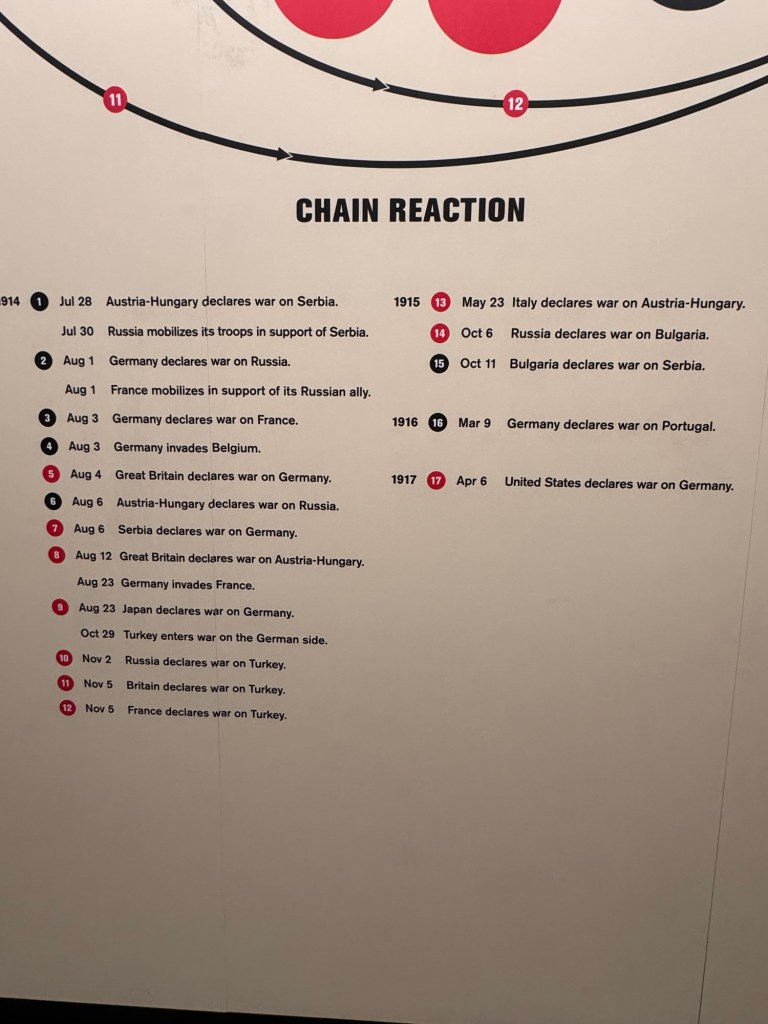
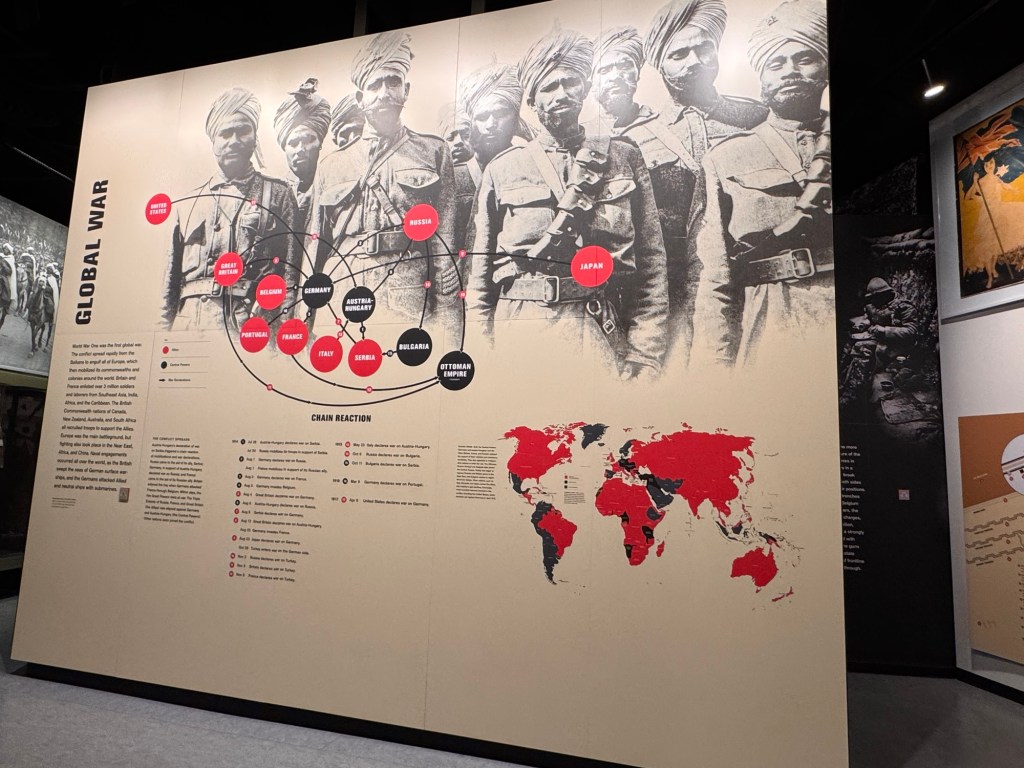
Archduke Franz Ferdinand was heir to the throne for Austria-Hungary. Serbians sought independence from Austria-Hungary, and saw Ferdinand as the leader who stood in the way. In 1914, Ferdinand visited Sarajevo to inspect the armies, but his driver took a wrong turn. Unfortunately for him, a Serbian man took aim and shot both Ferdinand and his wife Sophie.
As soon as word spread of his death, ultimatums came from Austria-Hungary, but Serbia rejected them. As a result, alliances were triggered, and the Great War began. In total over 41 million people died during the conflict.
Germany launched a U-boat campaign. These submarines would attack British merchant shipping and work to starve Britain. Though very effective, the British Royal Navy held off the German Navy and eventually caused their surrender in 1918.
The Museum
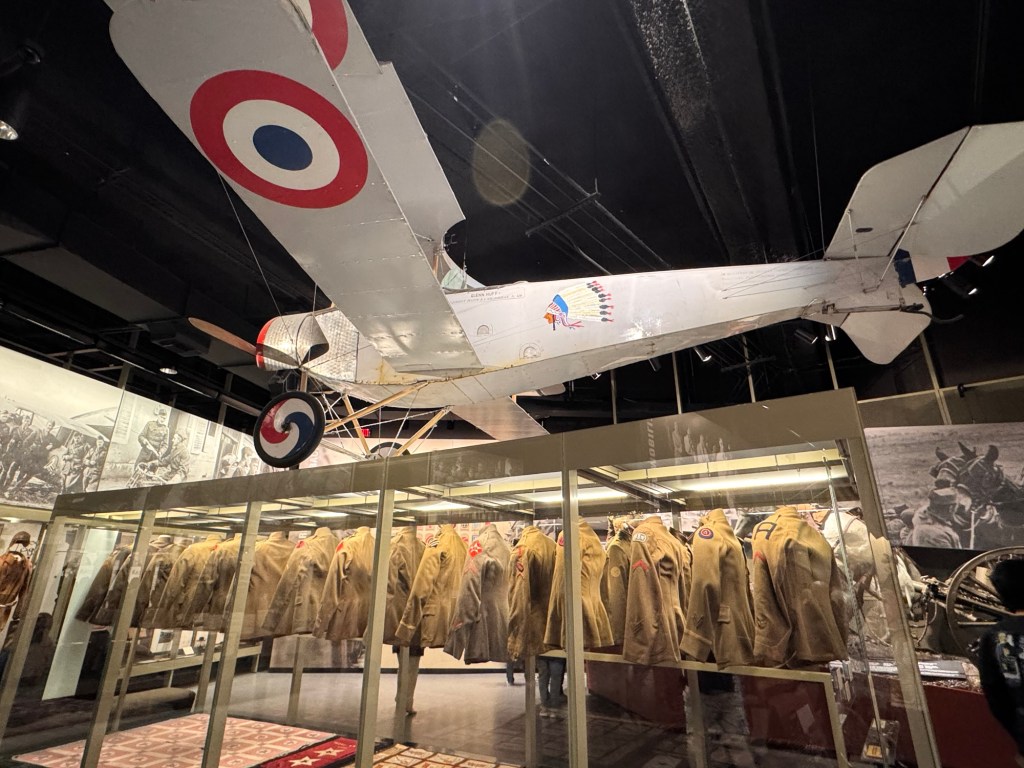
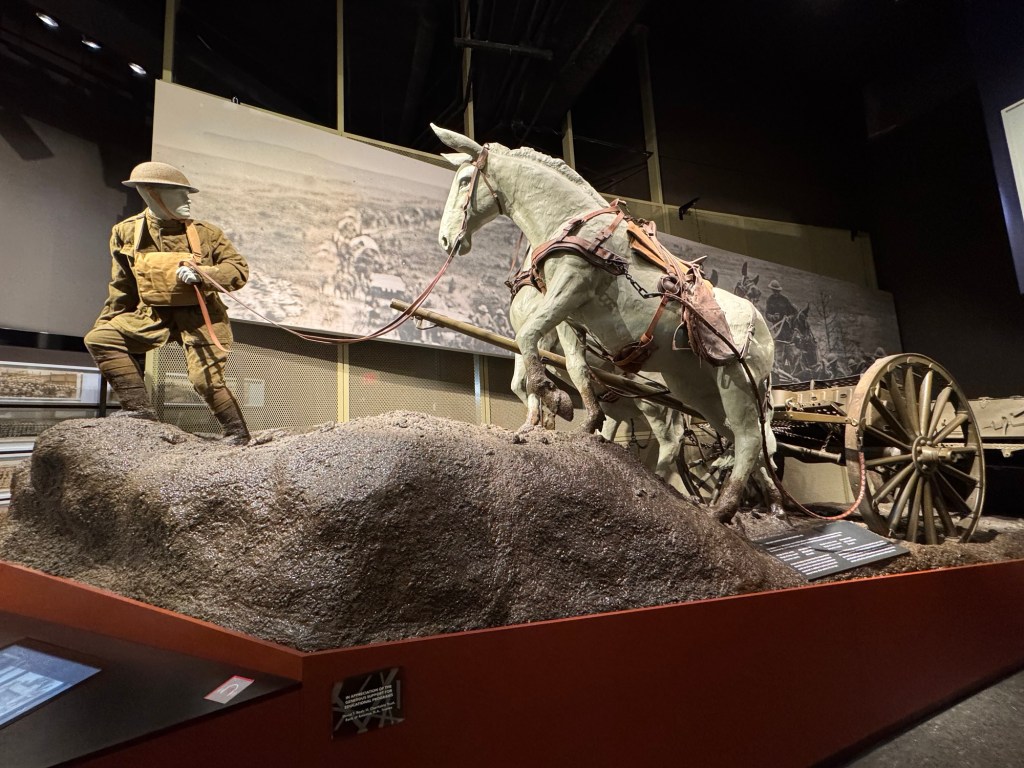
The museum does a beautiful job sharing multiple viewpoints from the war. You can see uniforms, weapons, letters, vehicles, and so much more. Honestly, it’s overwhelming and multiple visits would barely scratch the surface of this war.
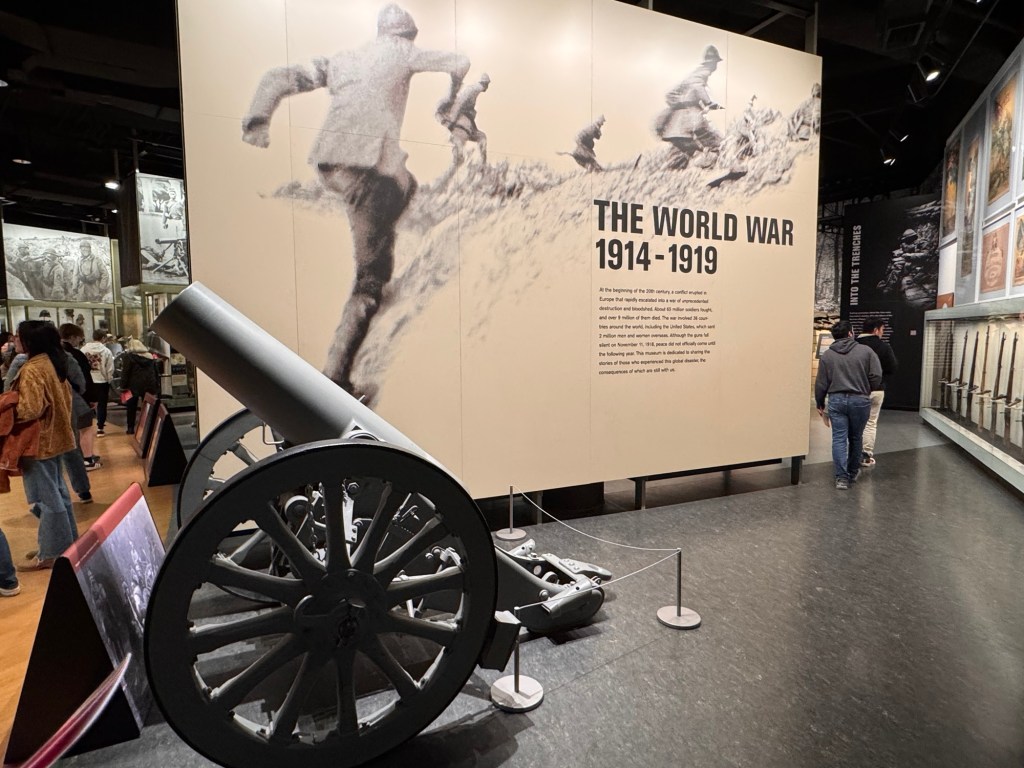
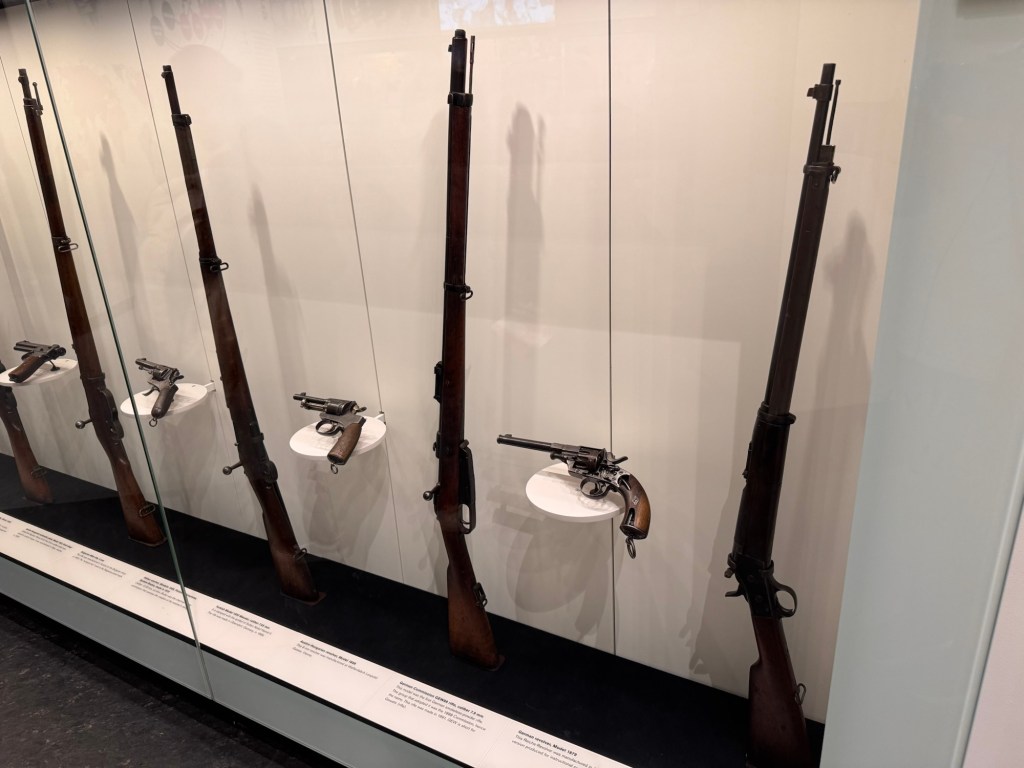
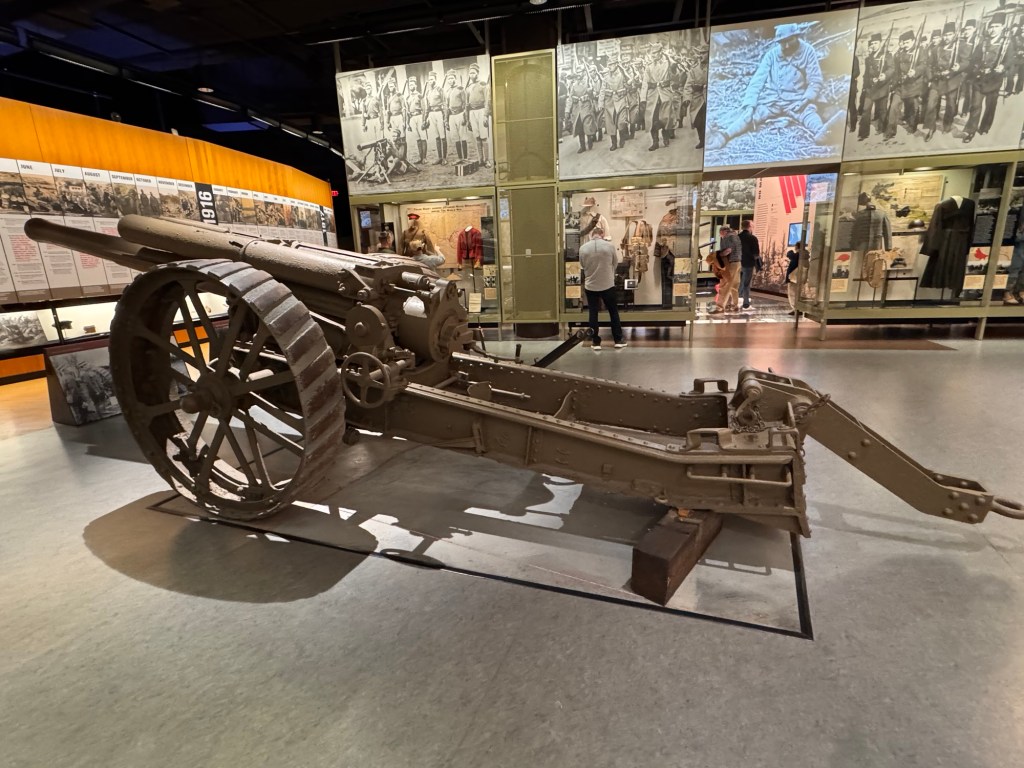
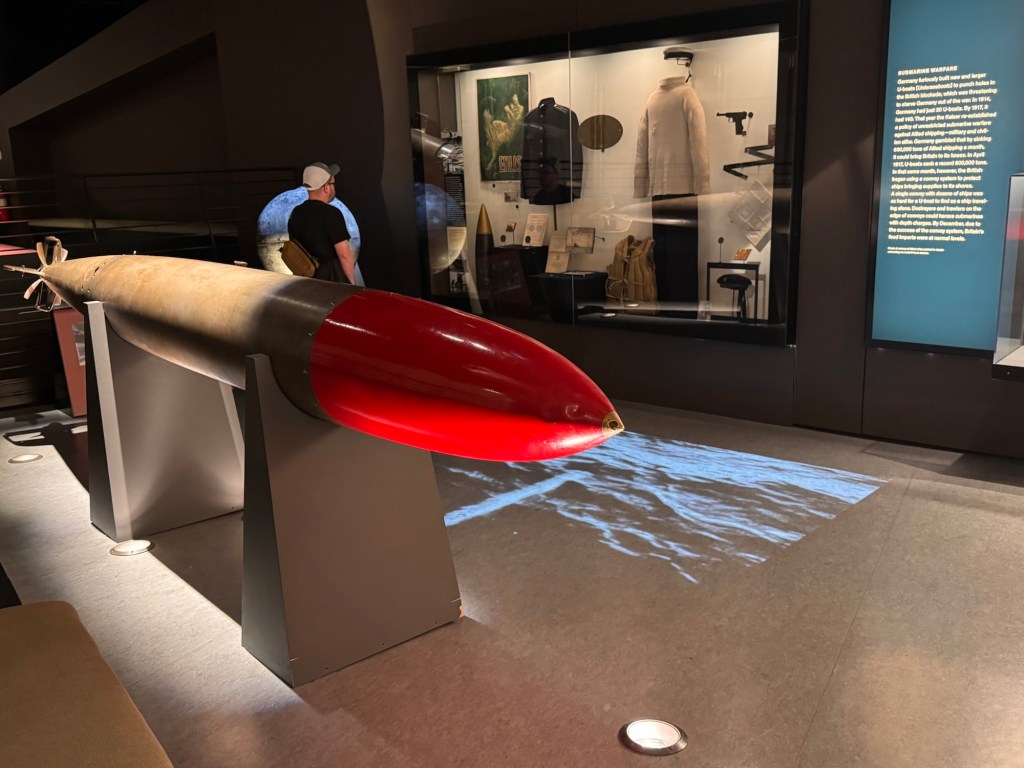
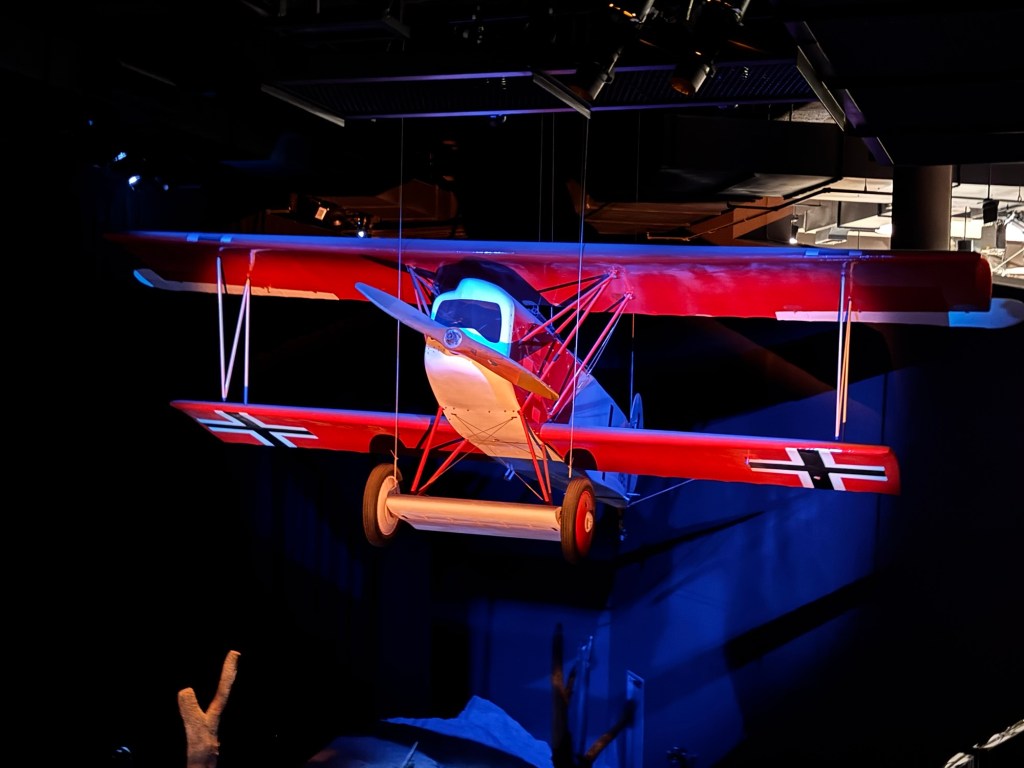
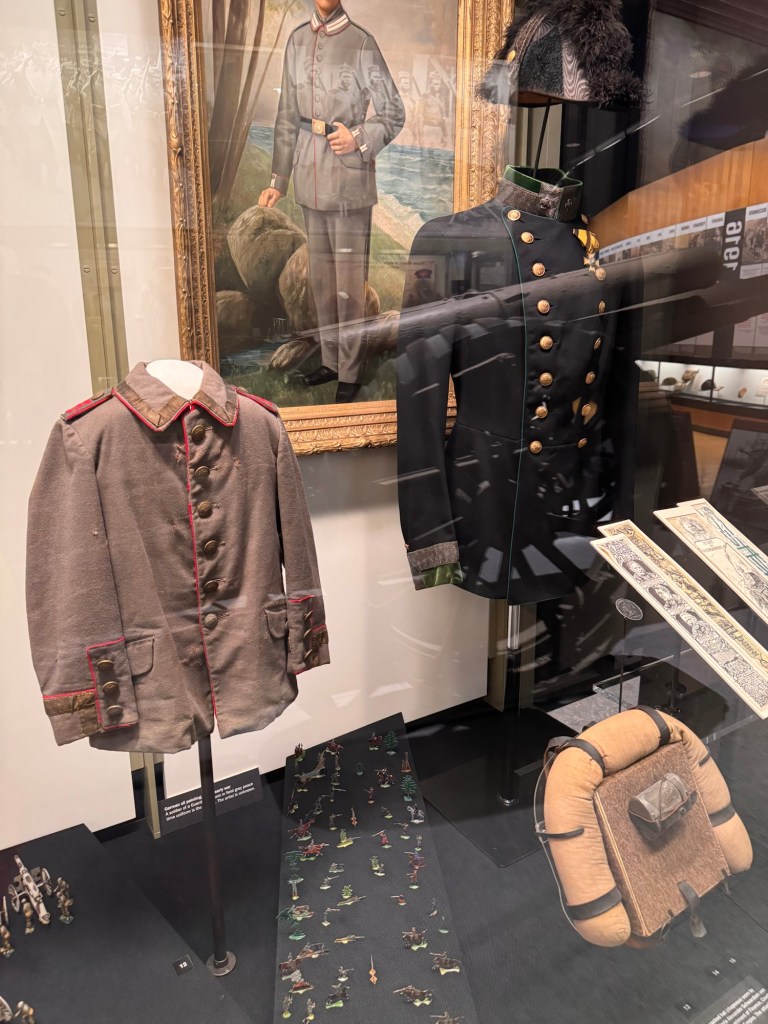
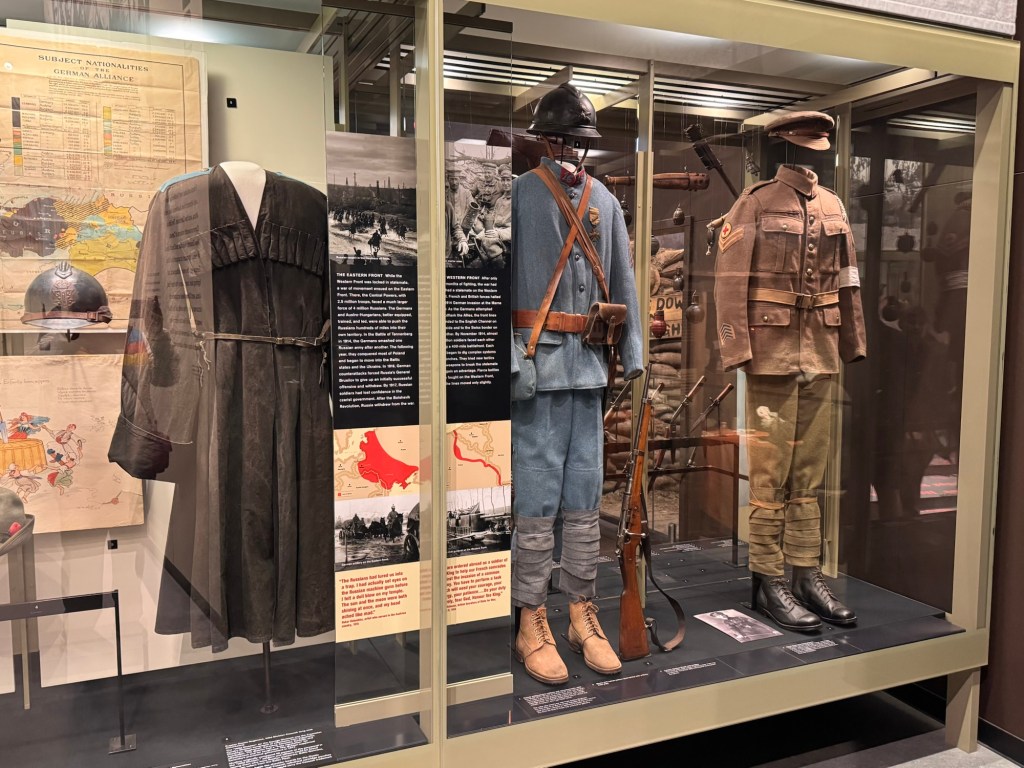
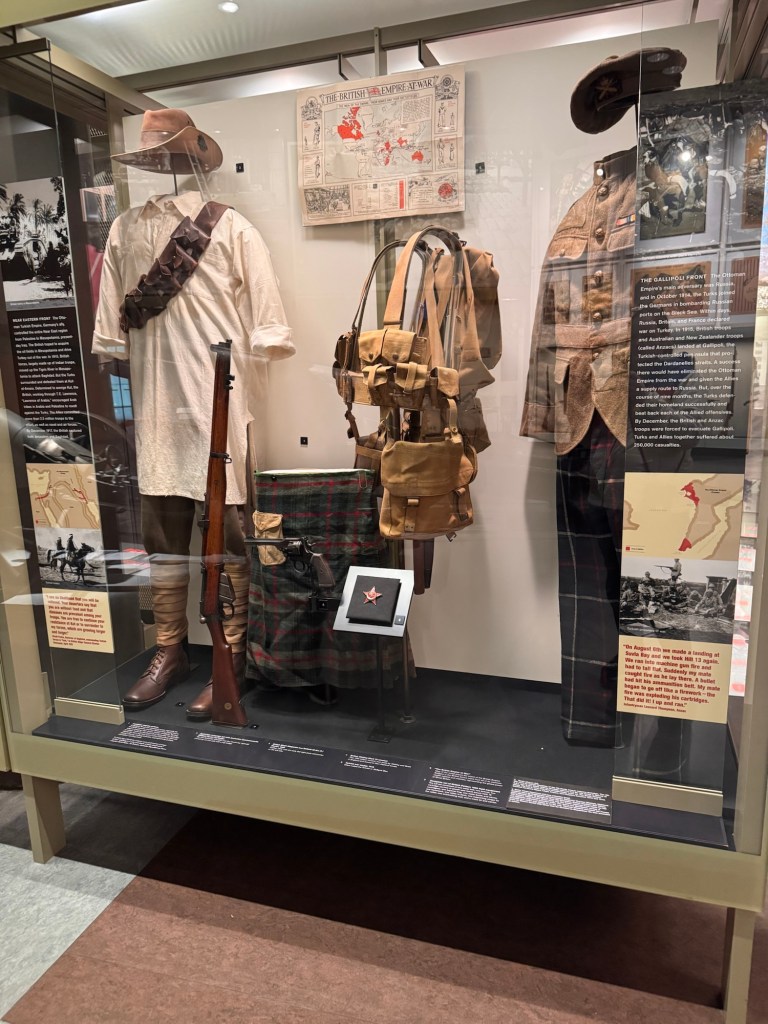
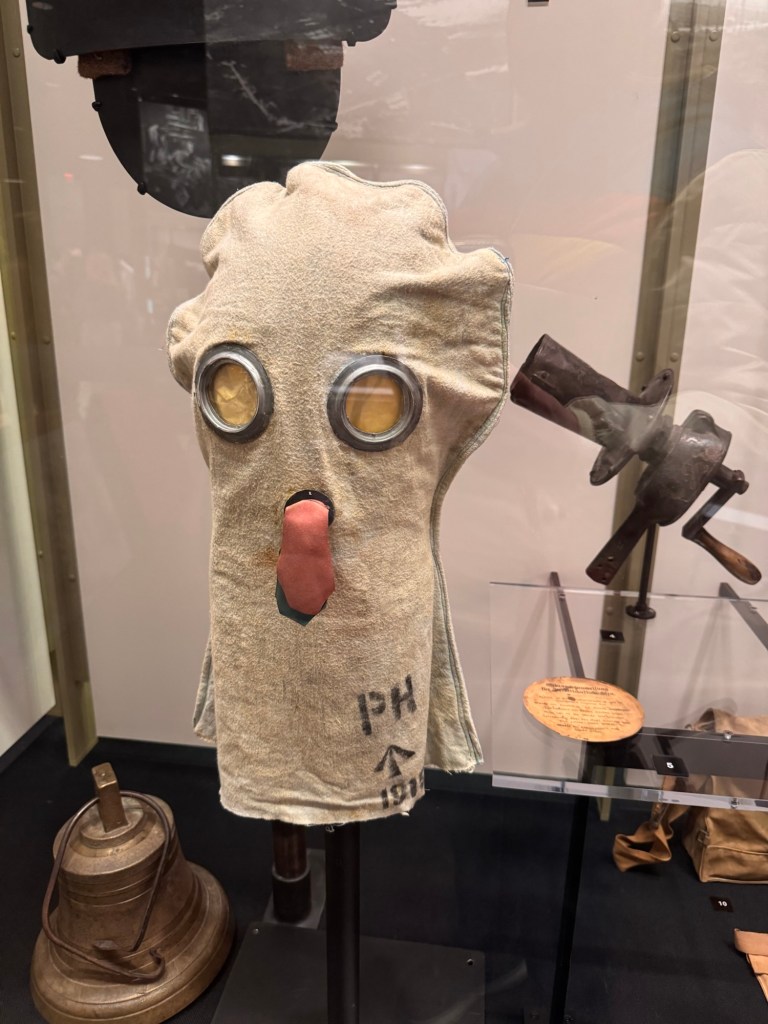
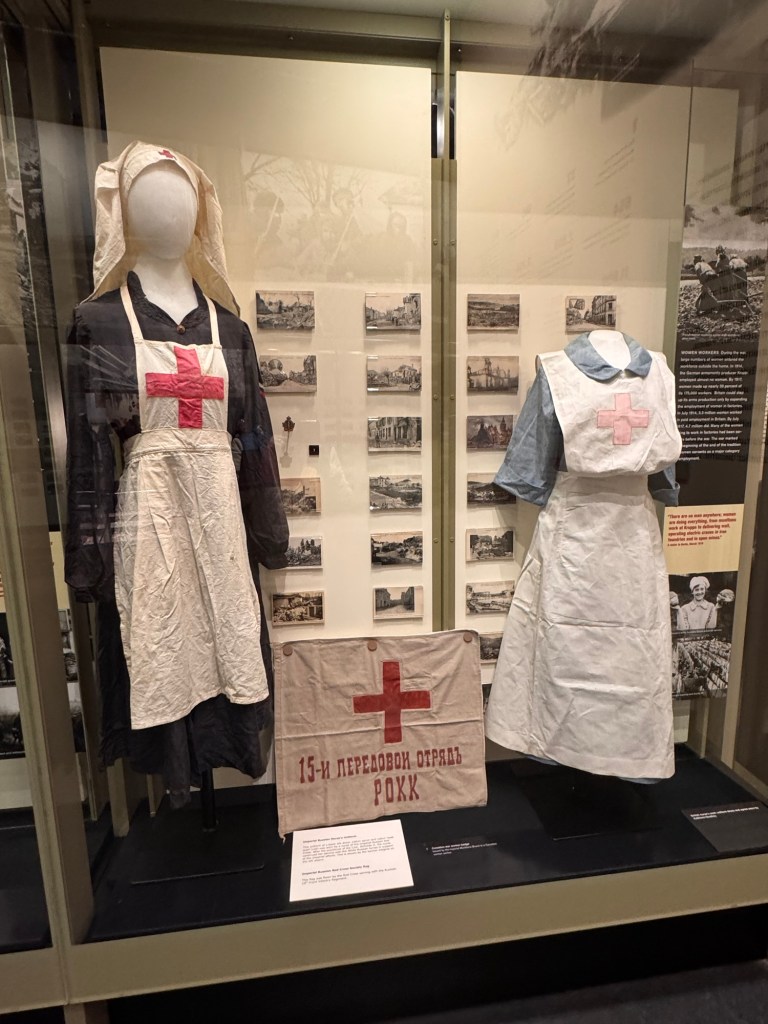
I’m not sure how you relate to the history of war, but I sure can express my areas of focus. Each time I study a war, I first look to the stories of people. Do I know when a specific battle occurred? Not usually, but I home in on the people and how they had to alter their lives.
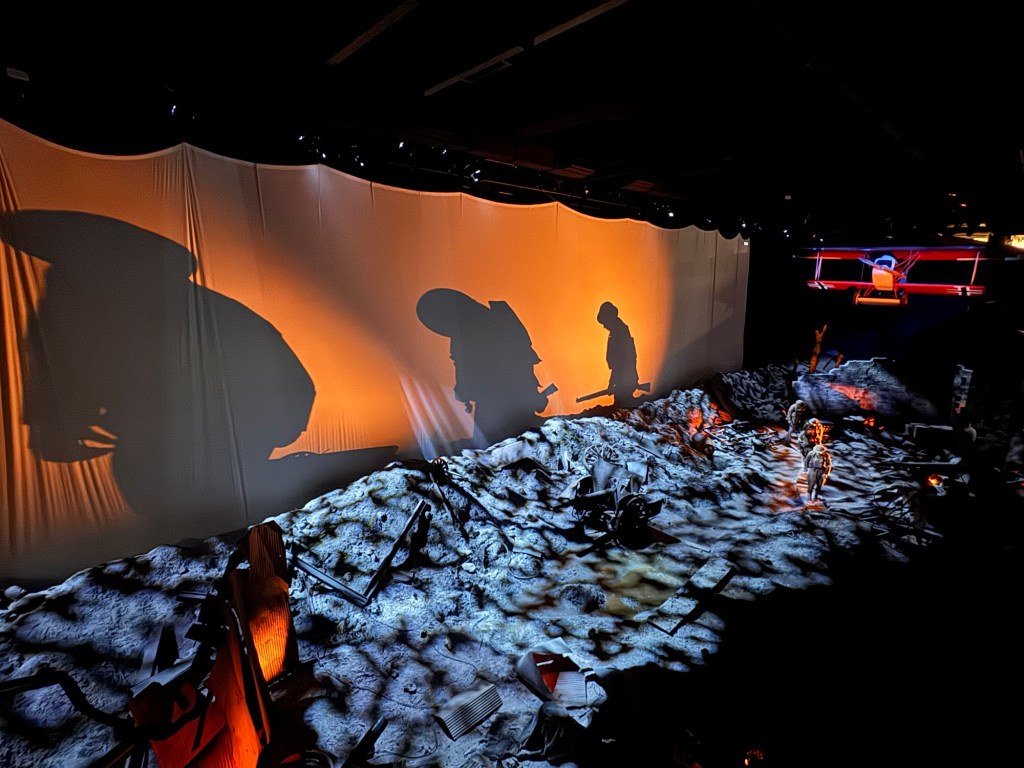
One of the most powerful displays depicted life in the trenches. Within the main portion of the museum, stories and artifacts appeared. Around the outside of the museum (think counterclockwise circle), different examples of trench warfare was explained.
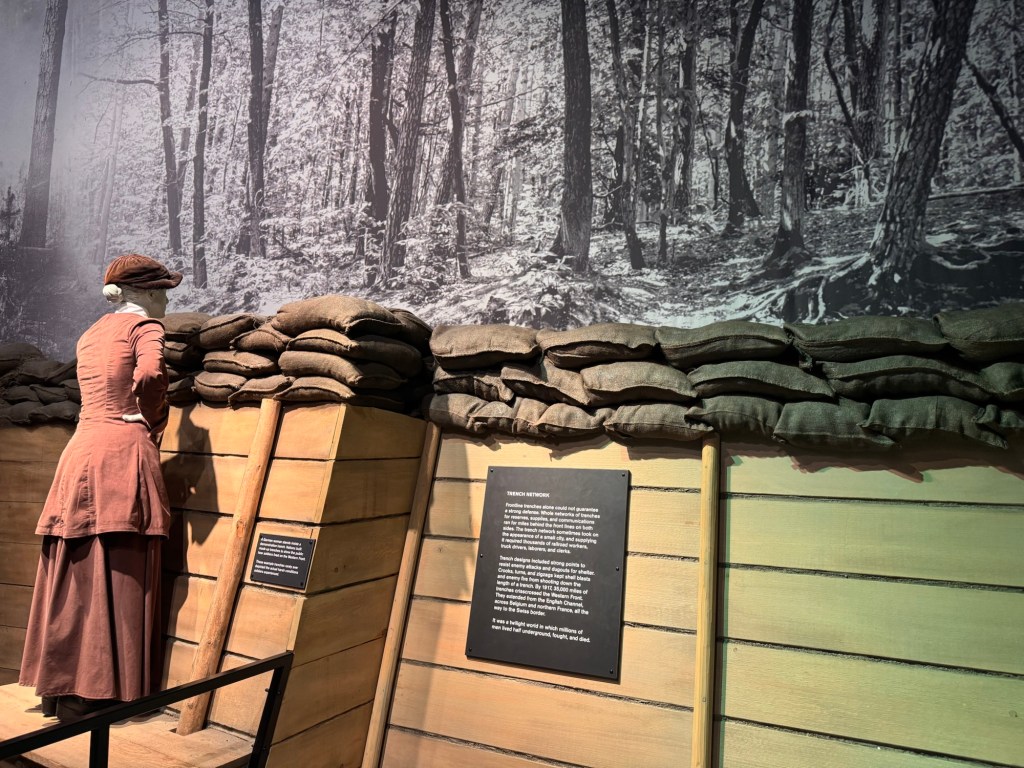
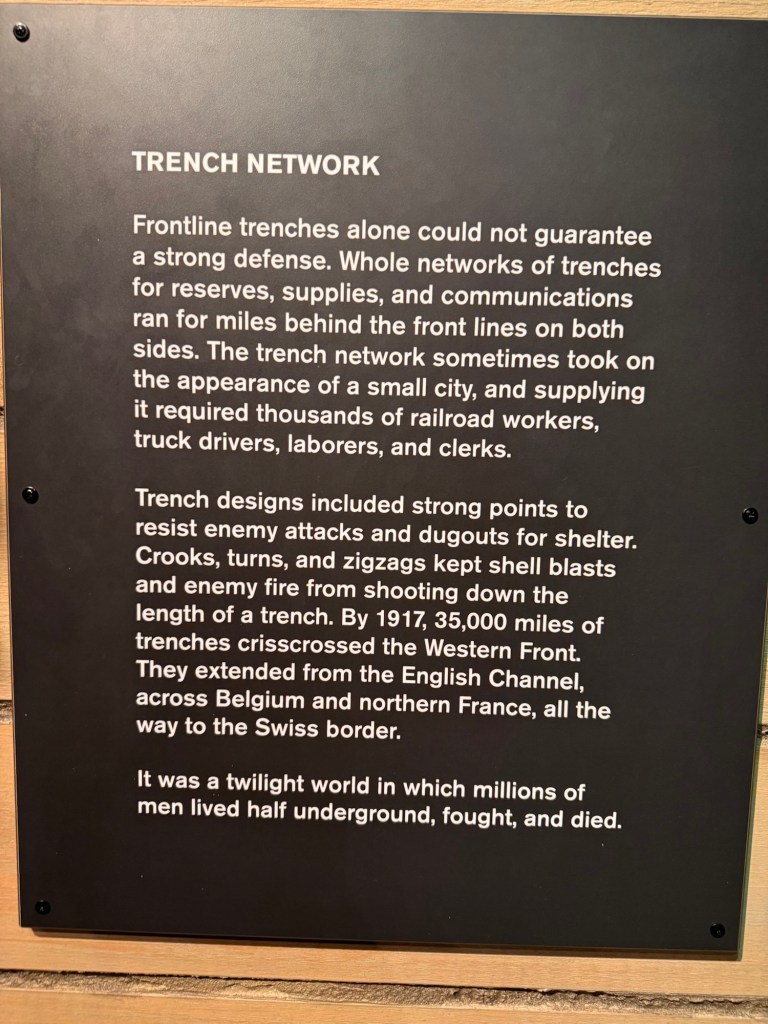
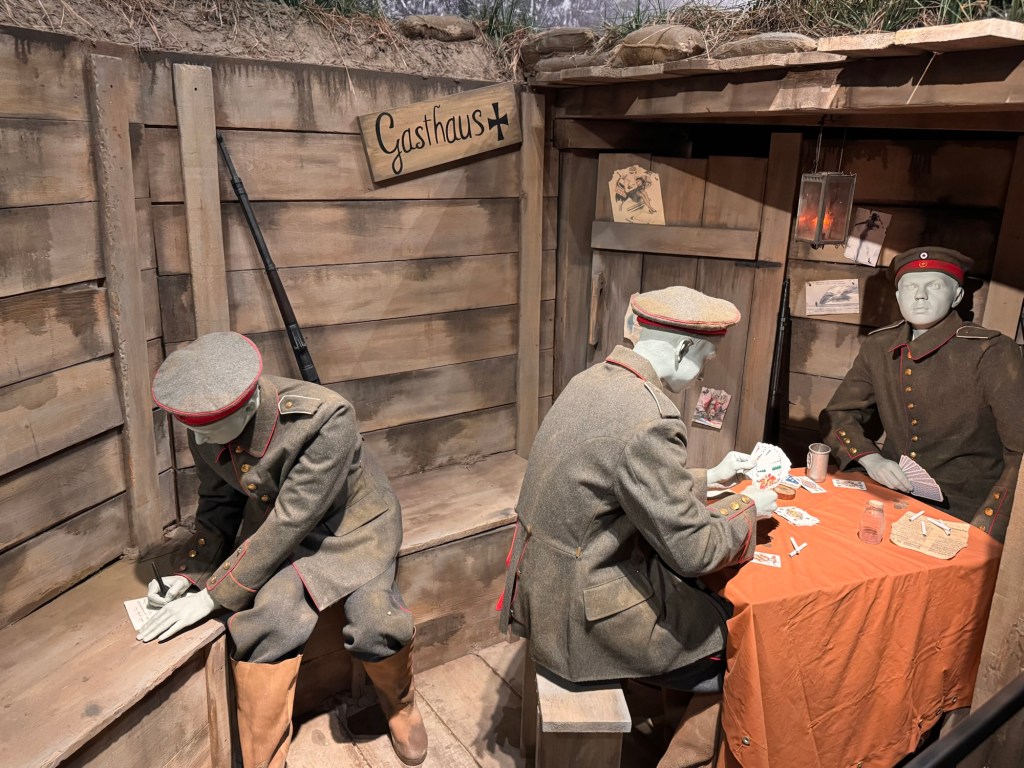
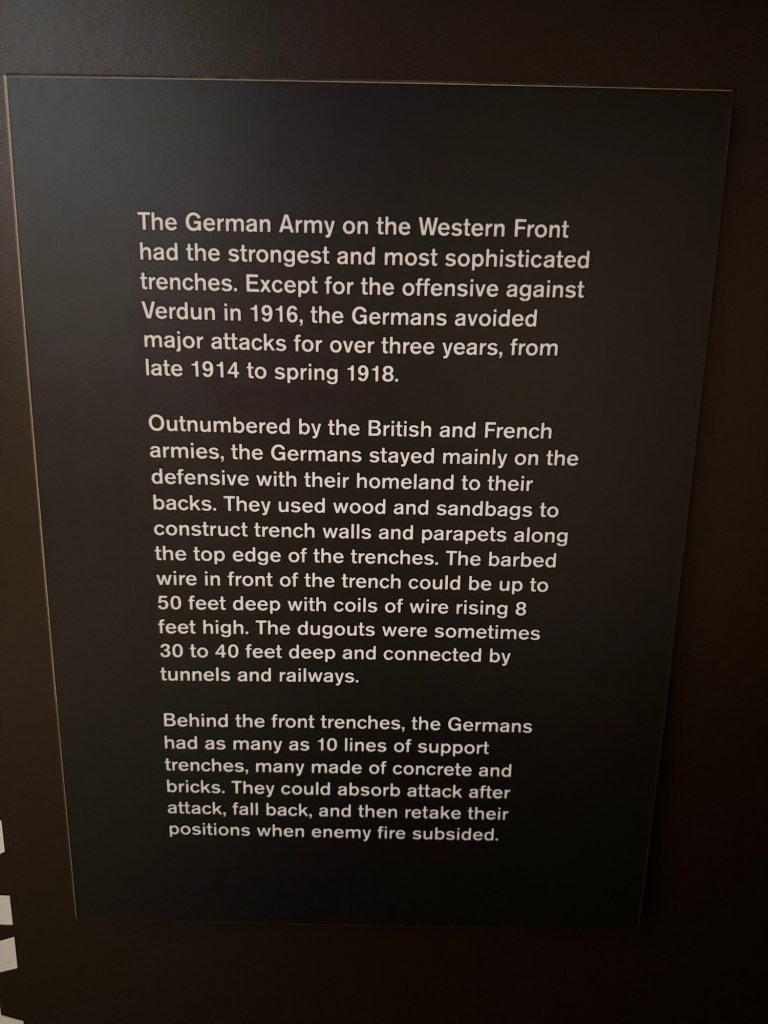
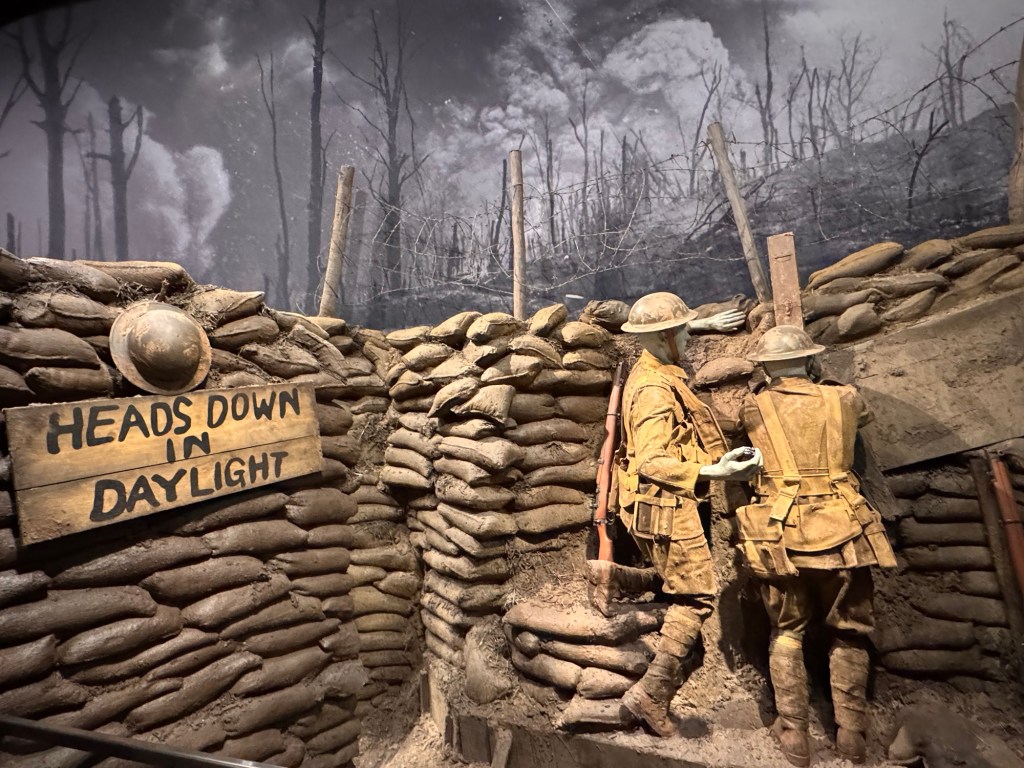
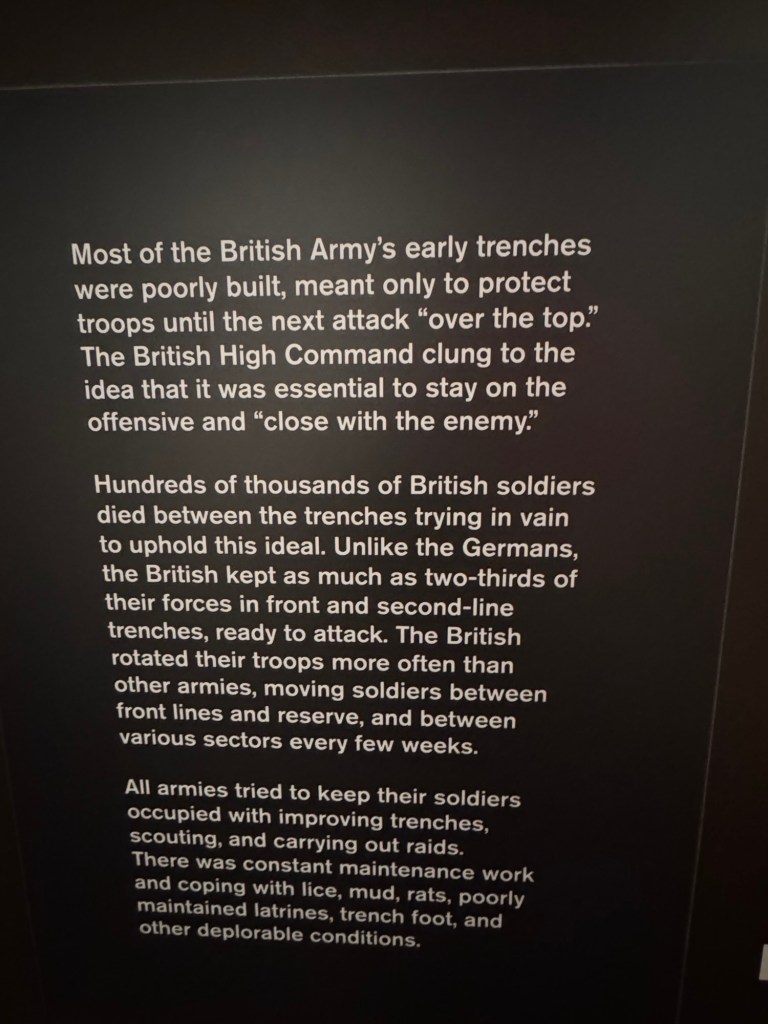
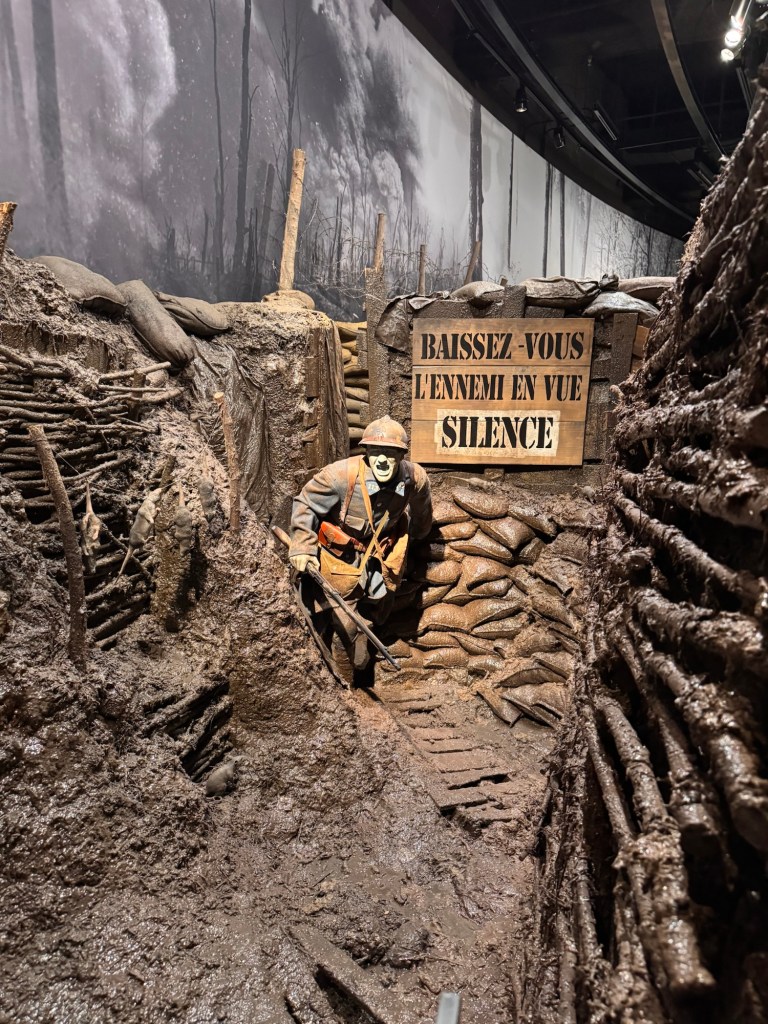
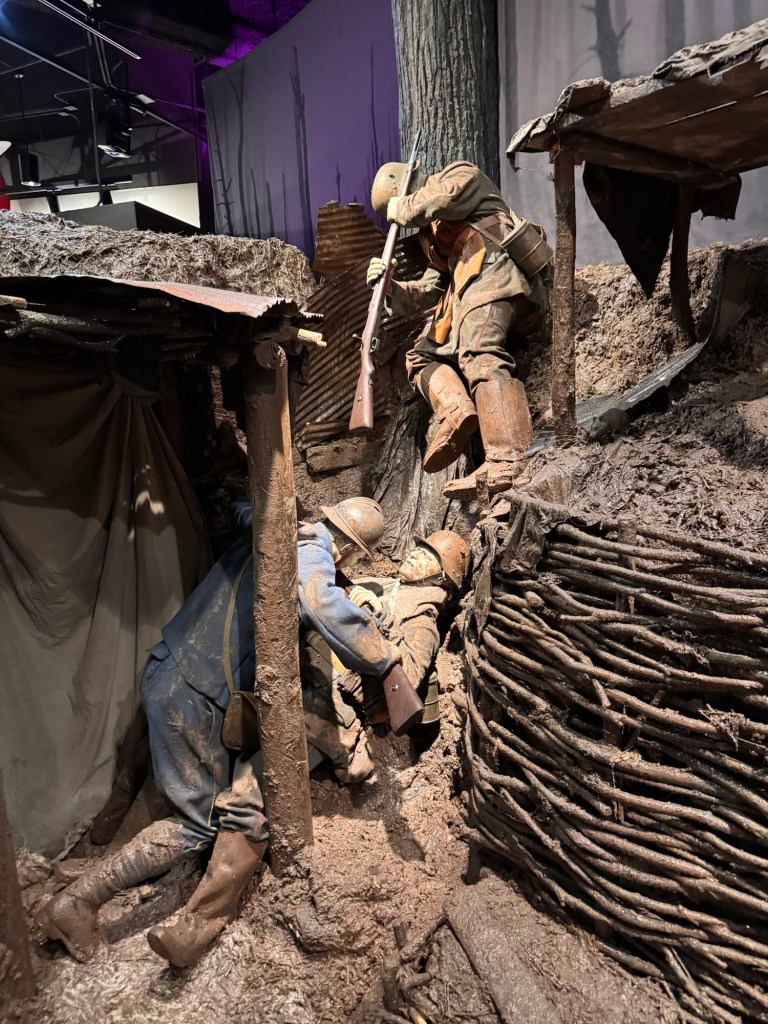
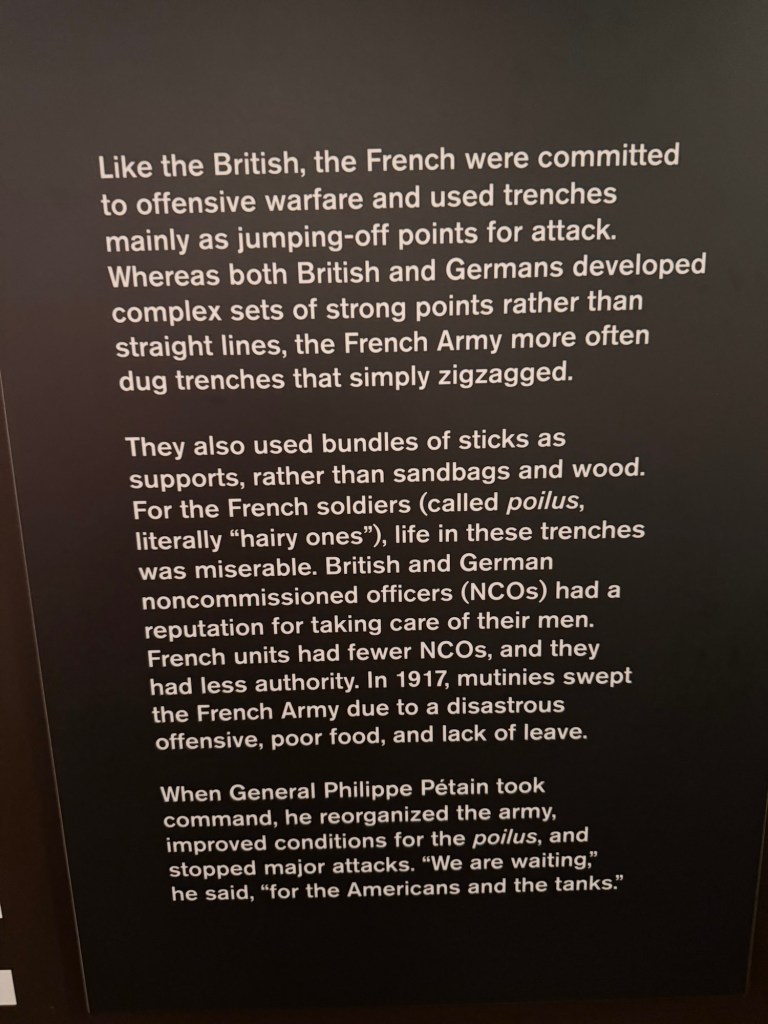
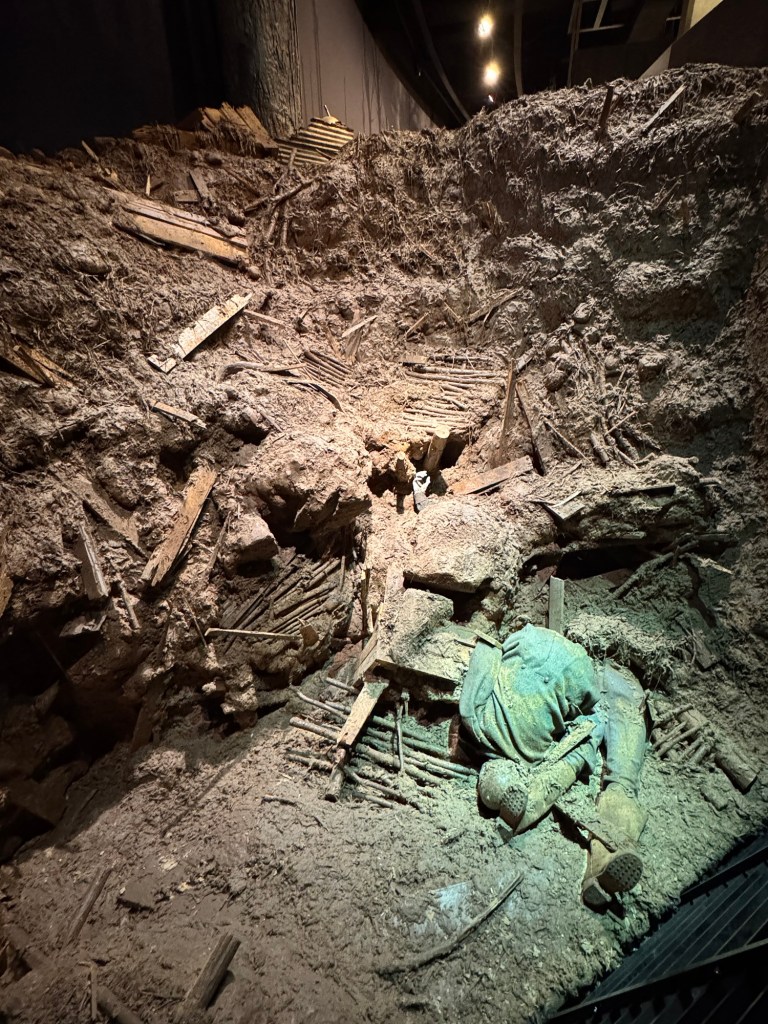
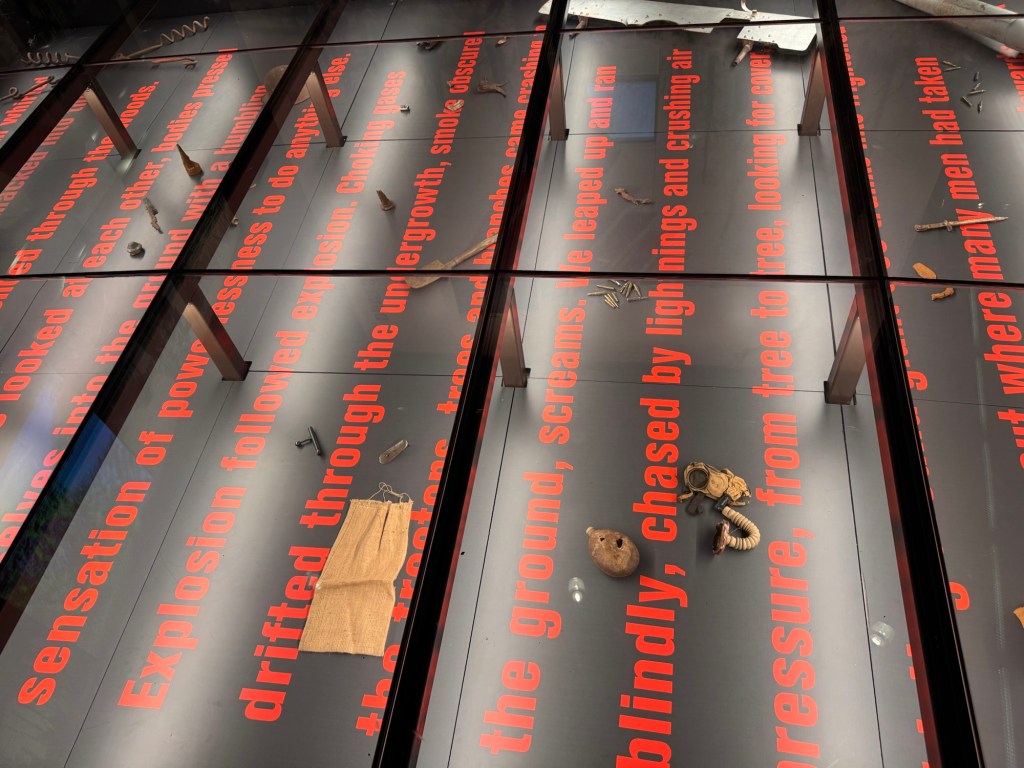
The museum also utilizes their floor space. Guests walk on another powerful display depicting historical reflections on the gruesome nature of war.
Eventually guests enter another area—America enters the war. President Wilson had worked to keep the United States out of the war, however several factors contributed to them joining.
- Germany not only sunk British merchants; they also sunk American merchants at sea.
- The U.S. intercepted a telegram from Germany to Mexico, offering an alliance should the U.S. join the war.
- 128 U.S. passengers on the Lusitania ocean liner had sunk at the hands of Germany.
- U.S. had financial ties to Britain and France’s success.
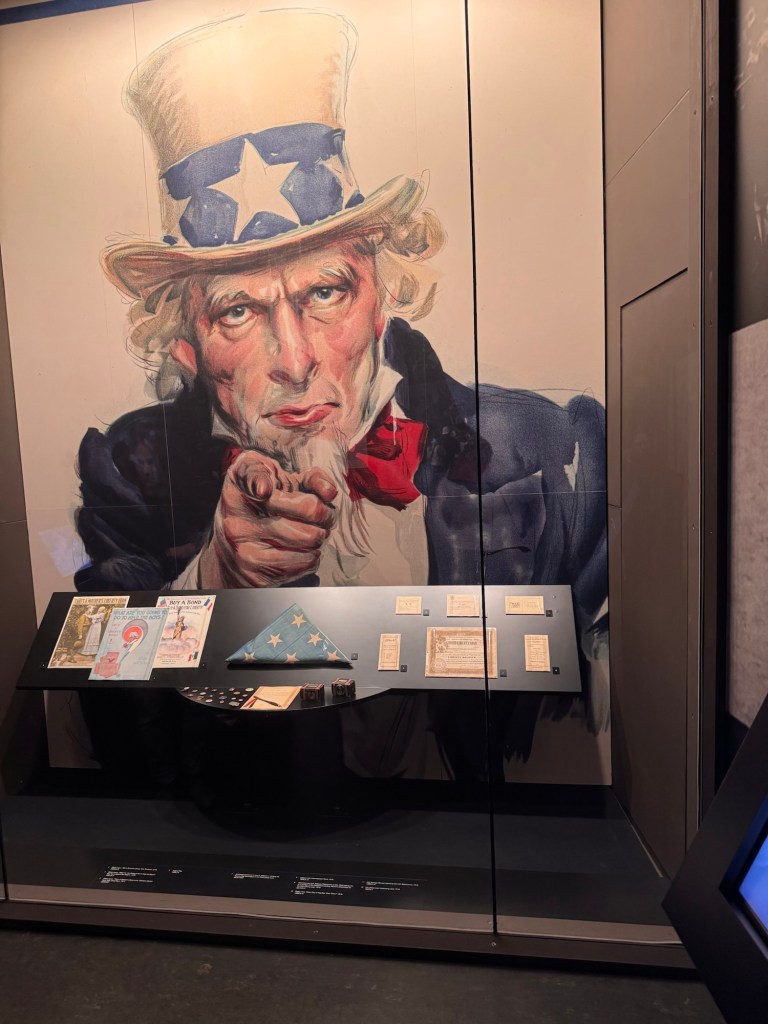
The remaining section of the museum shows how WWI affected those living in the United States. Despite the war staying overseas, people in the U.S. still made sacrifices. War, no matter where you are in proximity to it, can drastically alter your lifestyle.
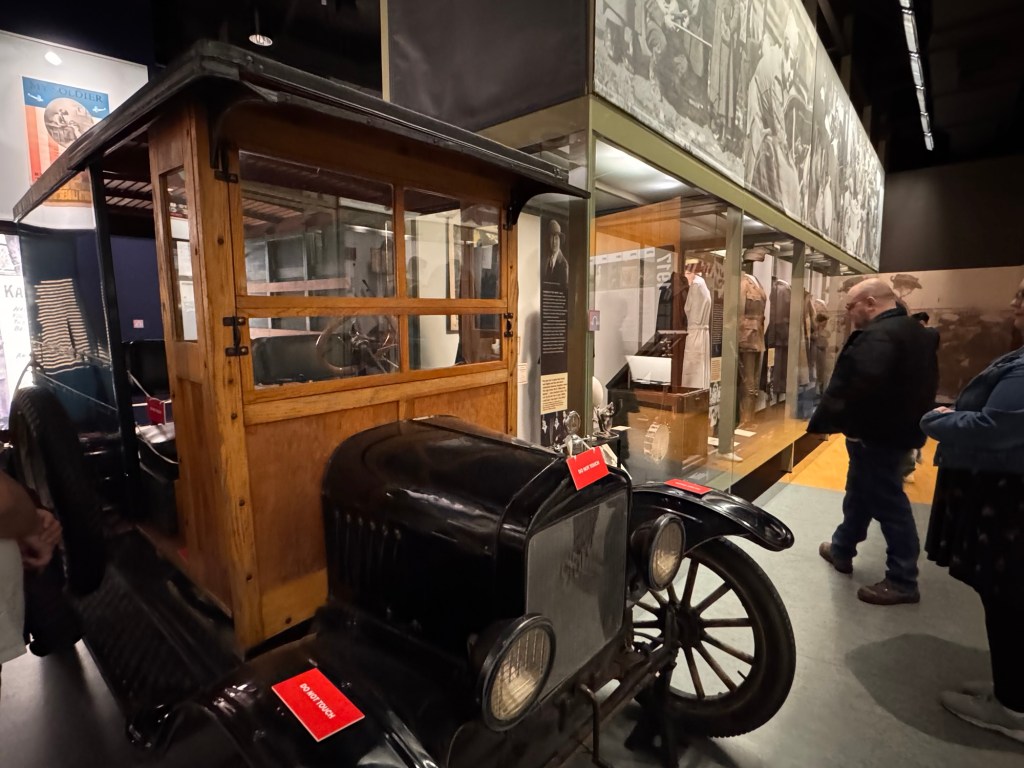
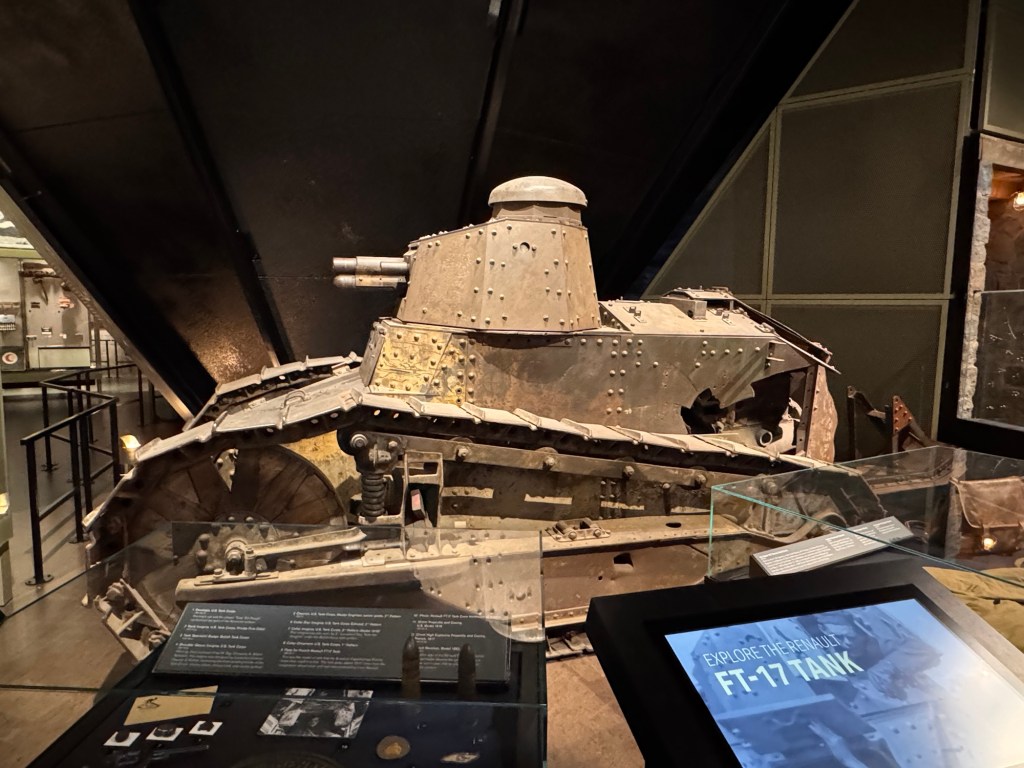
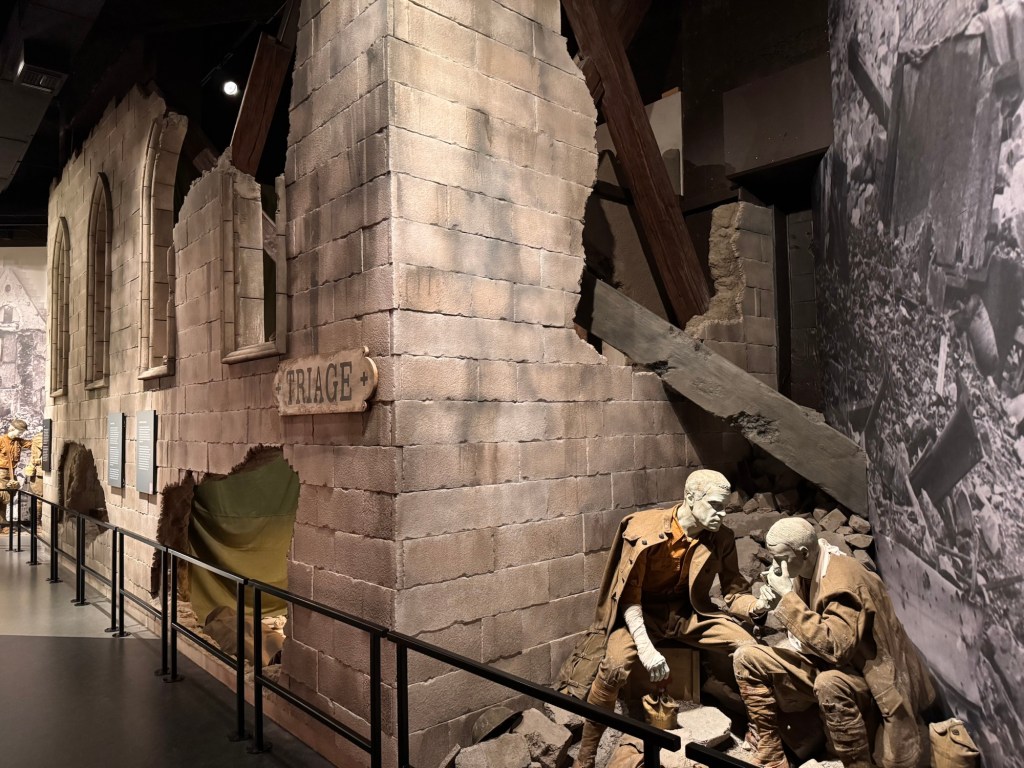
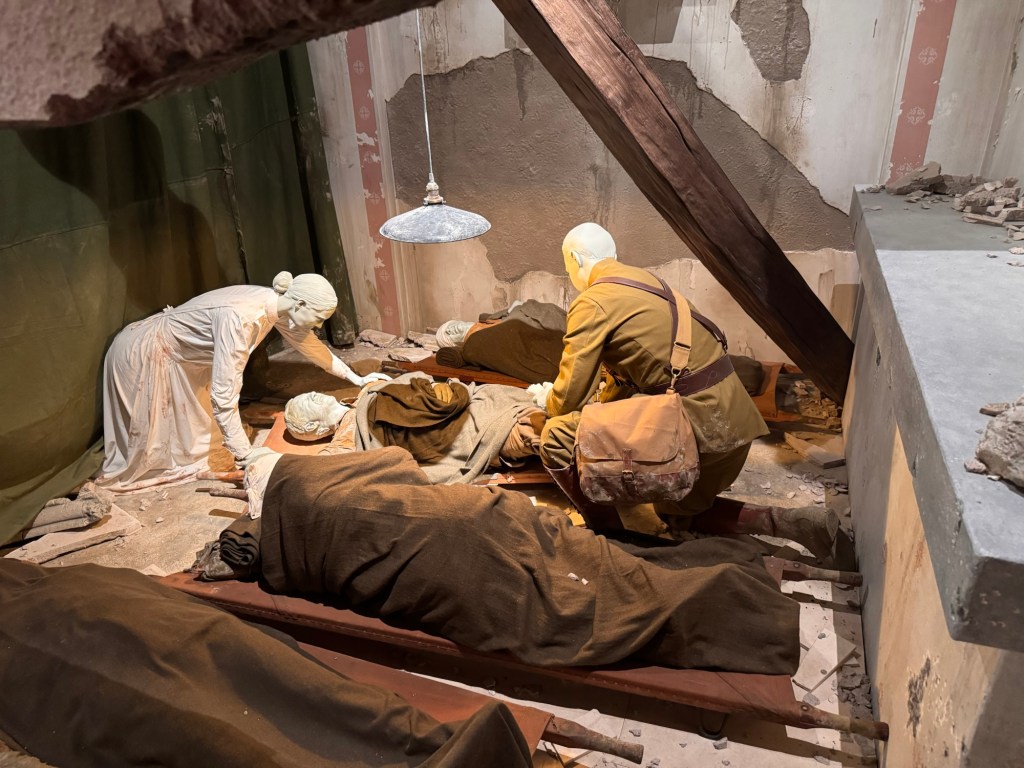
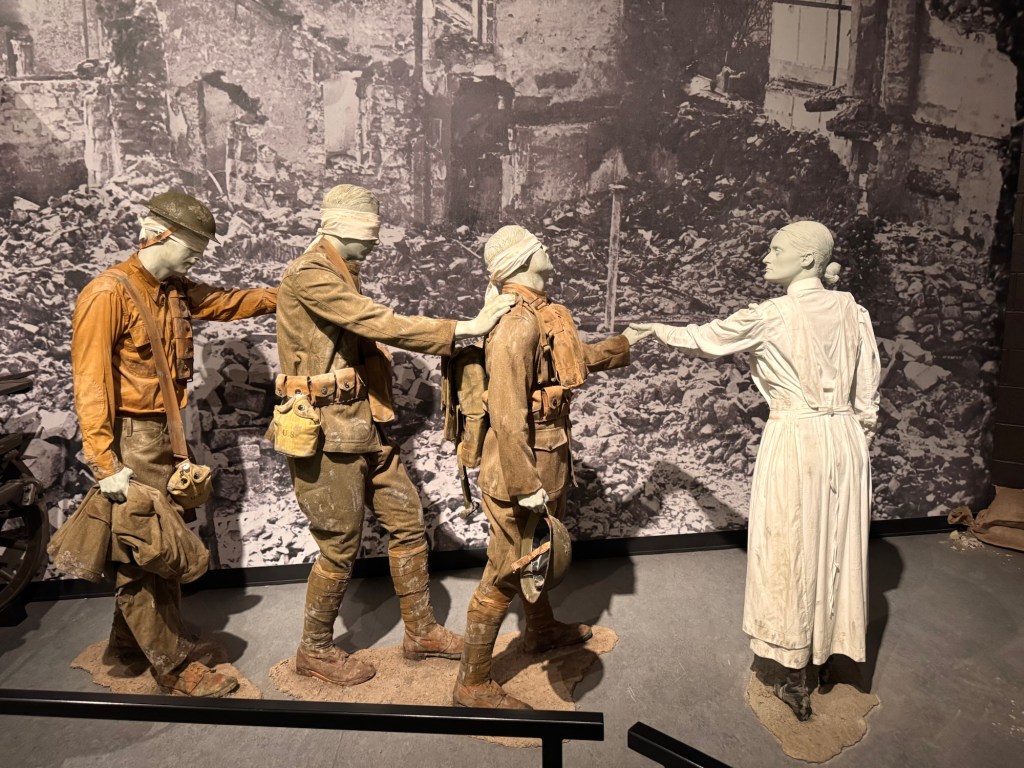
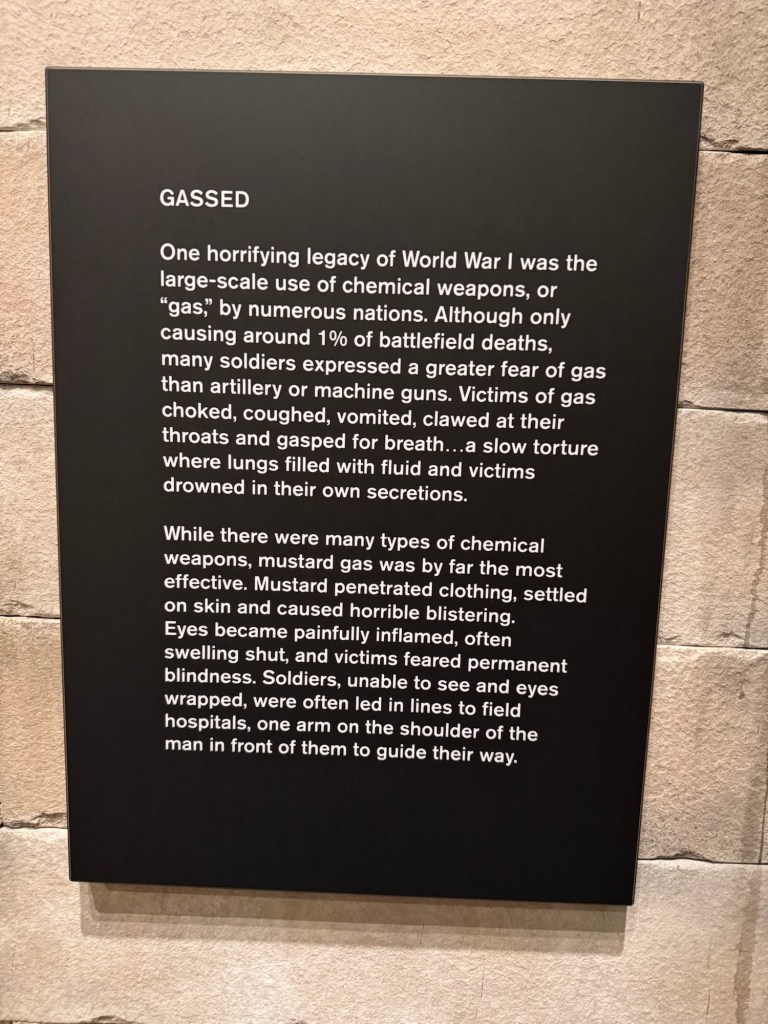
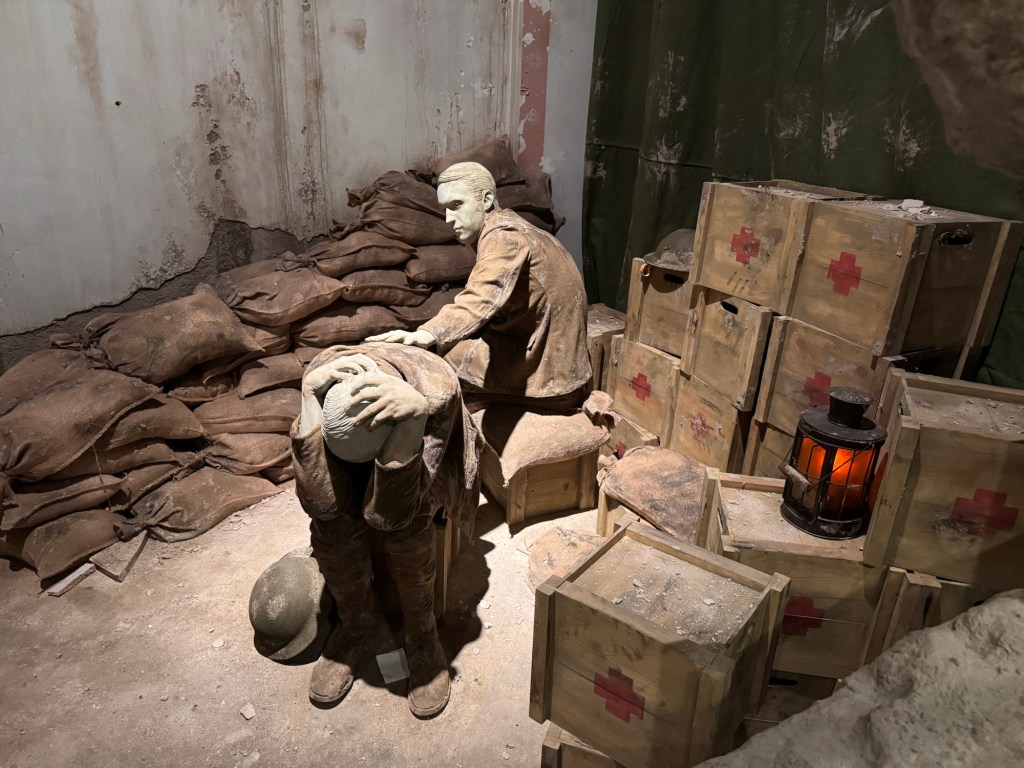
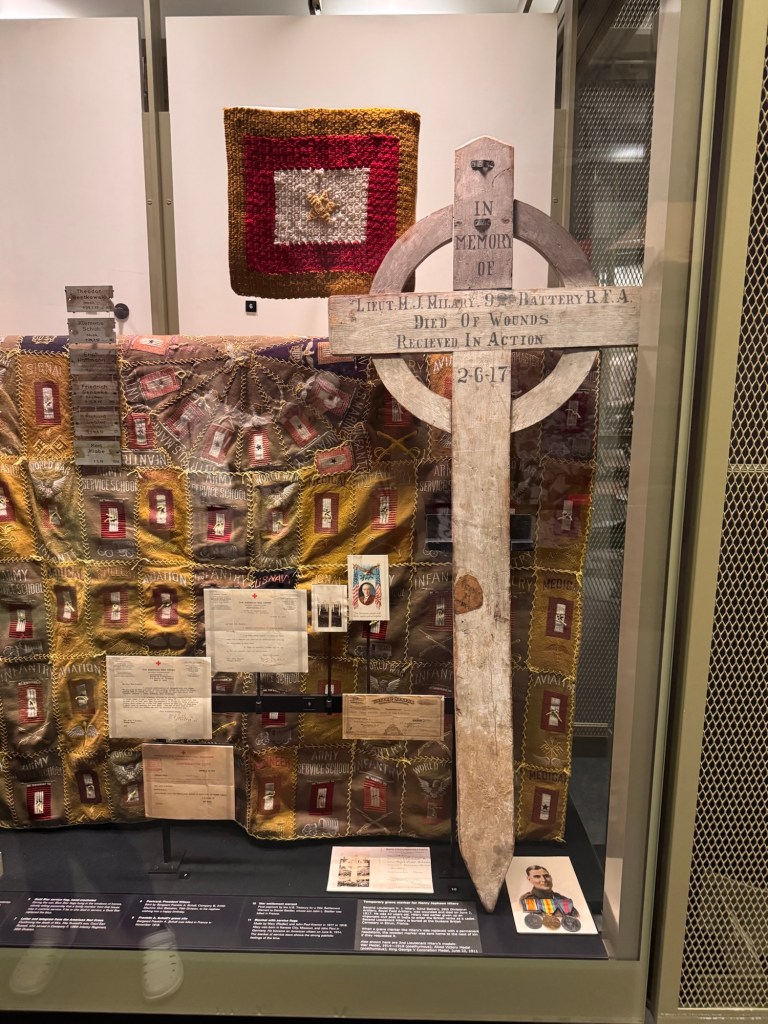
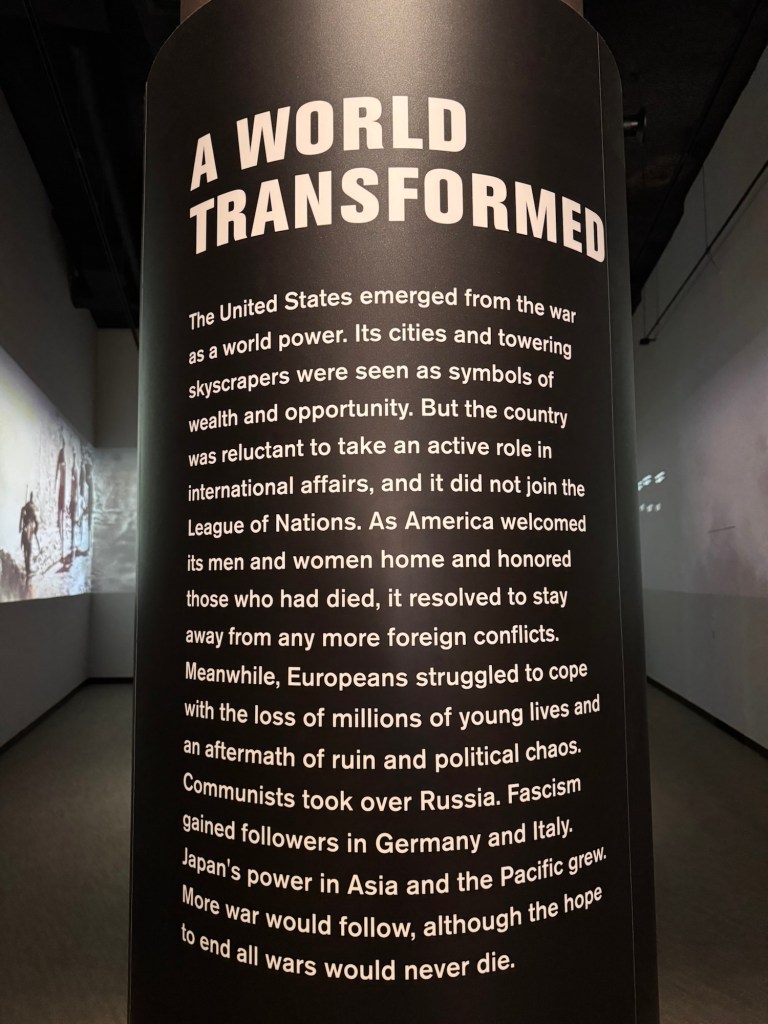
As with most museums, the information surpassed my ability to take it all in. While definitely worth the visit, it might take me some time before I want to again put myself in the midst of a time of great upheaval and change.
 Reba Roams the World
Leave a comment