
I have been working on an historical activity for the youth, and this activity’s location is set in Egypt. In addition, my only traveling this month has been between hospitals–thankfully, not for me! My sister had a few health issues arise, so I have been home taking care of her. She is doing well and in recovery mode. It just kept me from one of my trips. I am, however, planning my next trip at the end of next week. In the meantime, I decided to share some of my favorite Egyptian locations, and today I’ll start with my all-time favorite–Abu Simbel.
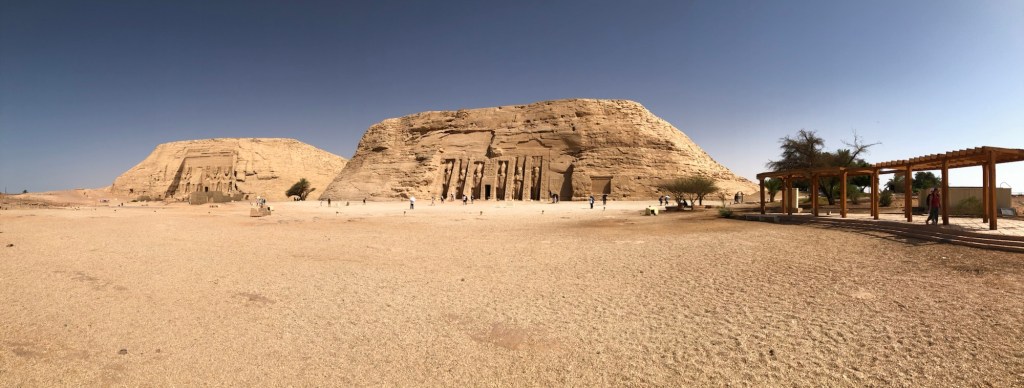
Located in Upper Egypt (which is really the southern part of Egypt), Abu Simbel sits approximately 20 miles north of the Egypt and Sudan border. In ancient times, Pharoah Ramesses II built two specific temples in the Aswan governate to impress upon the Nubian people how strong and mighty Egypt had become. Nubia, controlled by Egypt at the time, was replete with gold and many precious goods, and, as you might imagine, Egypt wanted to keep control of the area. The construction of the two Abu Simbel temples into the mountainside began around 1264 BC and lasted approximately 20 years.
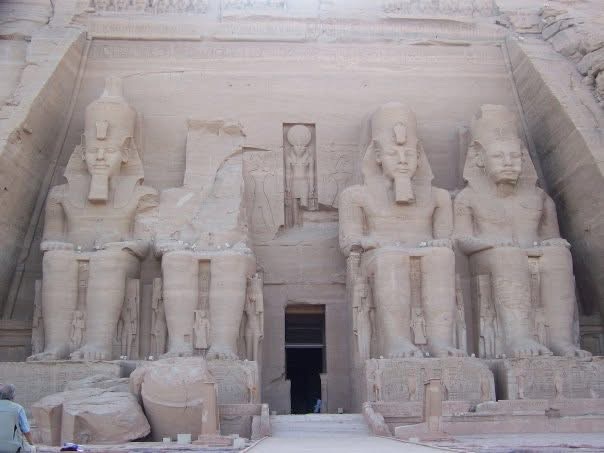
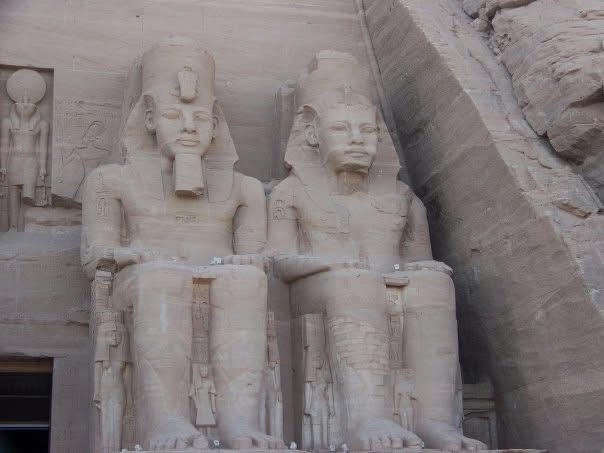
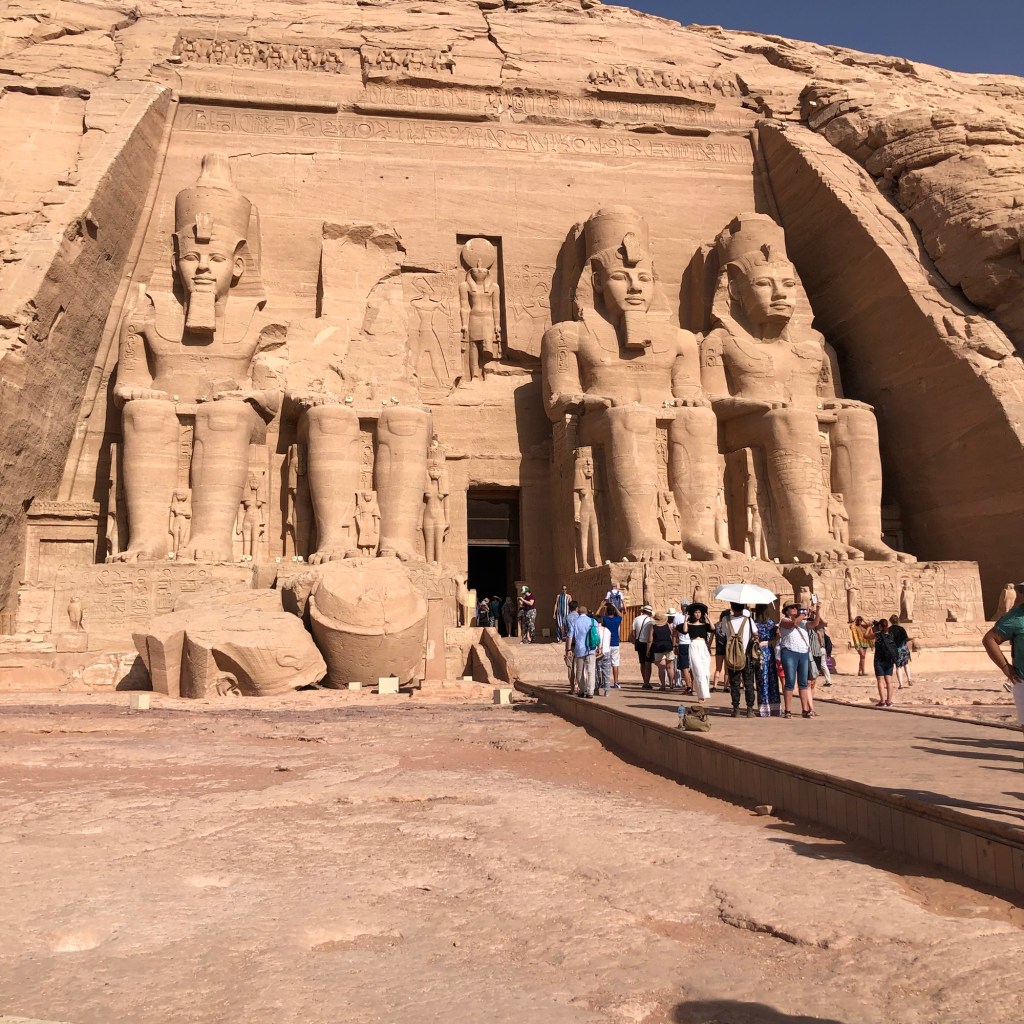
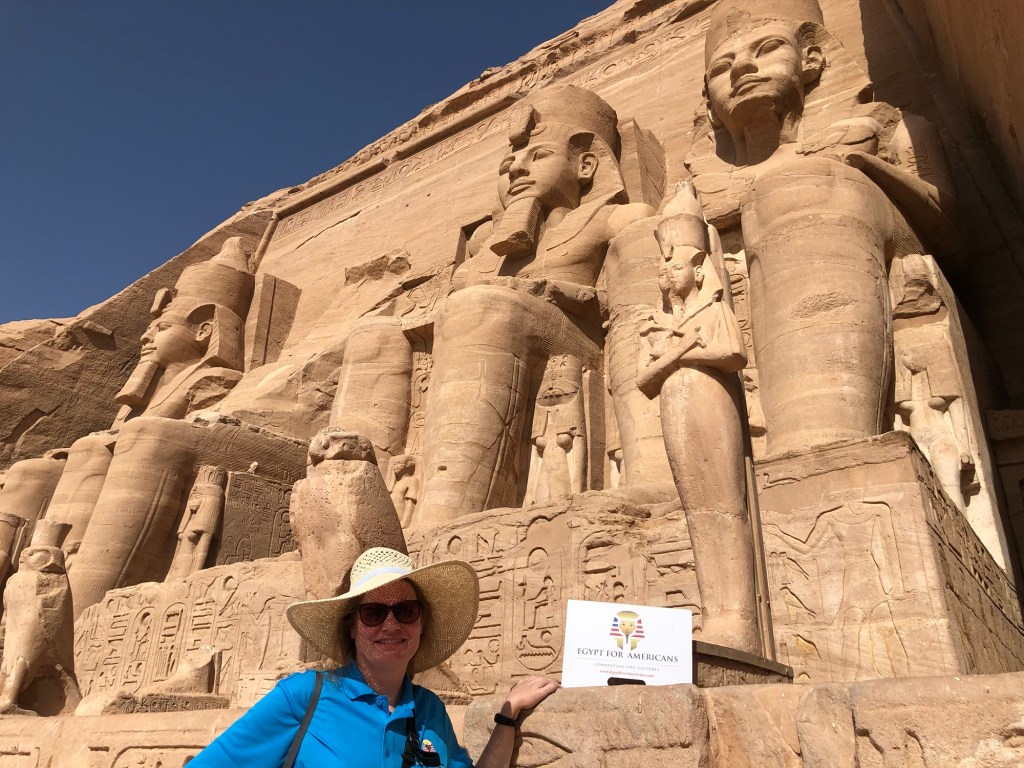
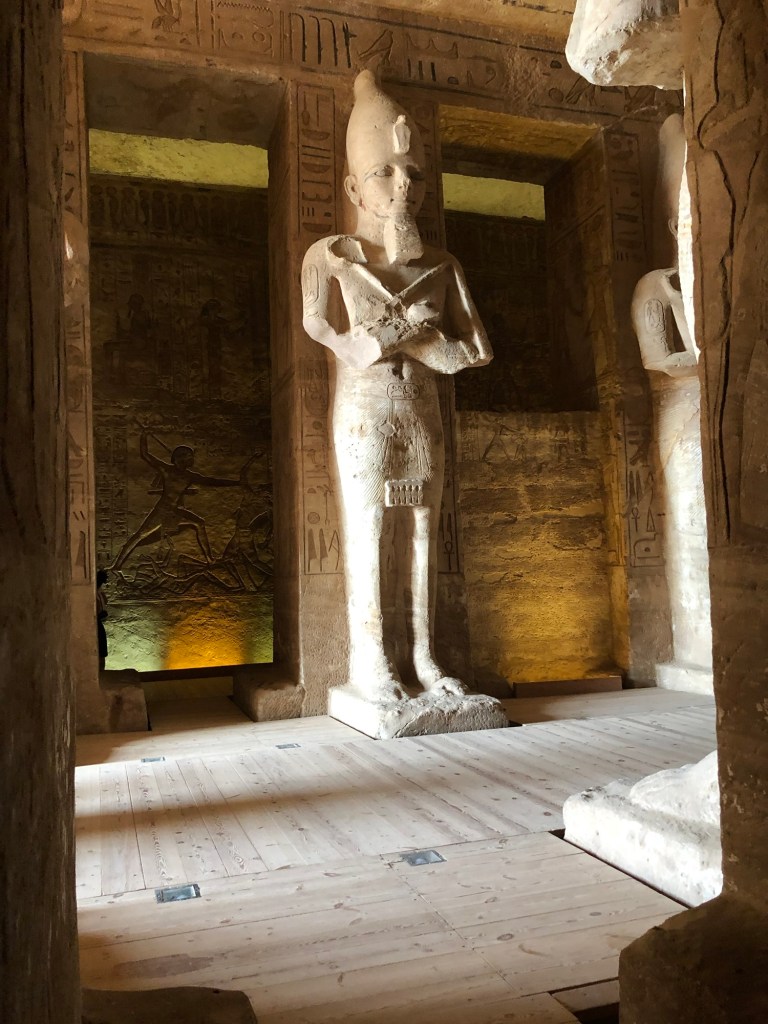
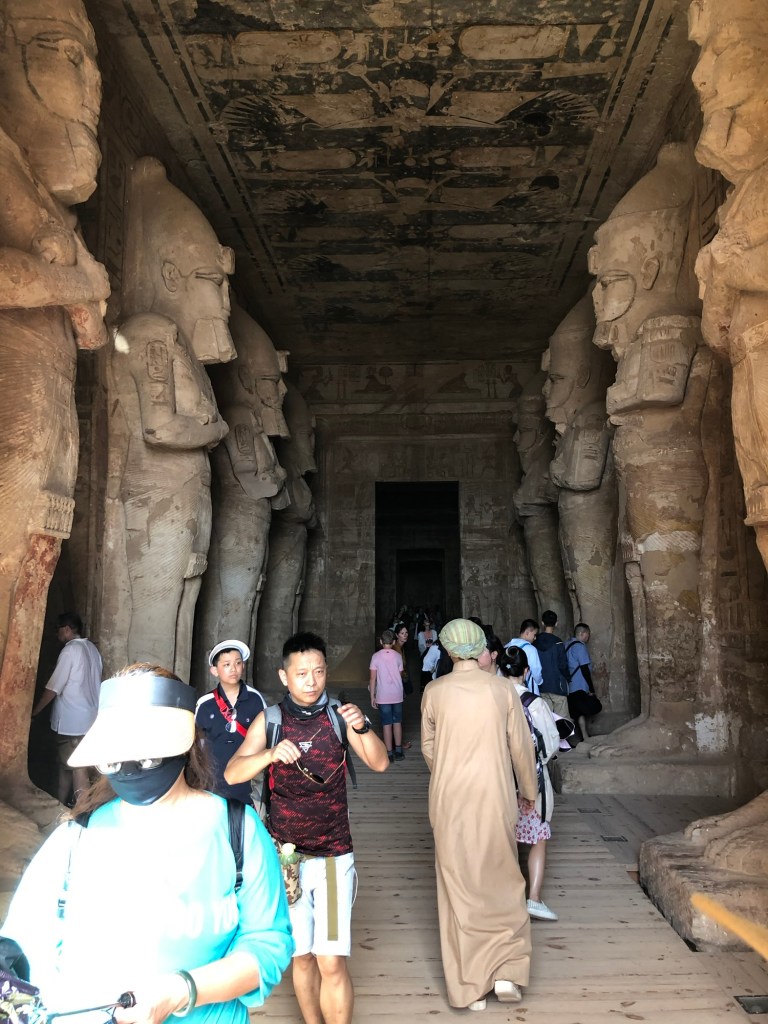
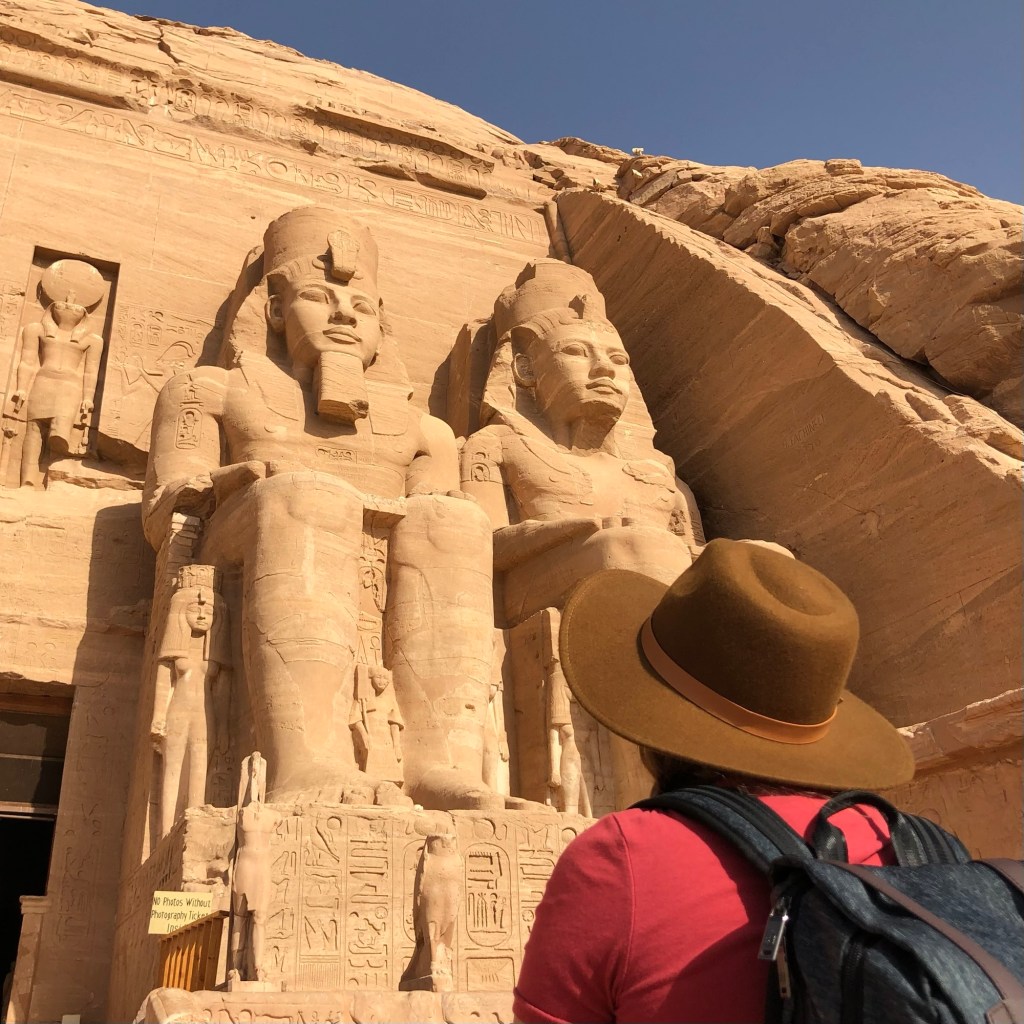
The Egyptians dedicated the larger temple, also known as the Great Temple, to Ramesses II, Amun-Re of Thebes, Re-Horakhty of Heliopolis, and Ptah of Memphis. On the outside of the temple, there are four 66-foot statues of Ramesses II. Surrounding his feet are small figures that represent Nefertari (favorite wife), his children, and his mother. Walking inside the temple, sculptures commemorate Ramesses II’s great leadership during the Battle of Kadesh.
Ramesses II was a great showman. He battled the Hittite forces under Muwatalli II in Kadesh. A combined 50-60 thousand forces fought in what could be the largest chariot battle in history. Although Ramesses II claimed victory (especially as depicted on his temples), the actual results of the battle were deemed inconclusive. Nevertheless, Ramesses II put his wealth and power on display and showcased this strength inside the Great Temple of Abu Simbel.
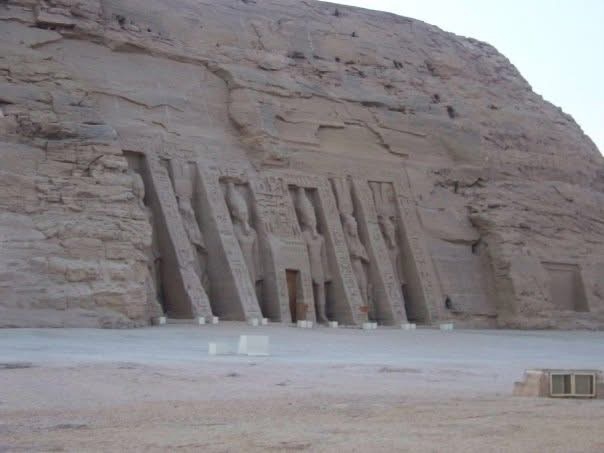
As for the second temple, aptly named the Small Temple, it had been dedicated to his favorite wife, Queen Nefertari. It displays 35-foot tall statues of the king and queen. This temple signifies the first time an Egyptian king dedicated a temple to his queen. Nefertari thus became divine, and the goddess Hathor filled the interior of the temple.
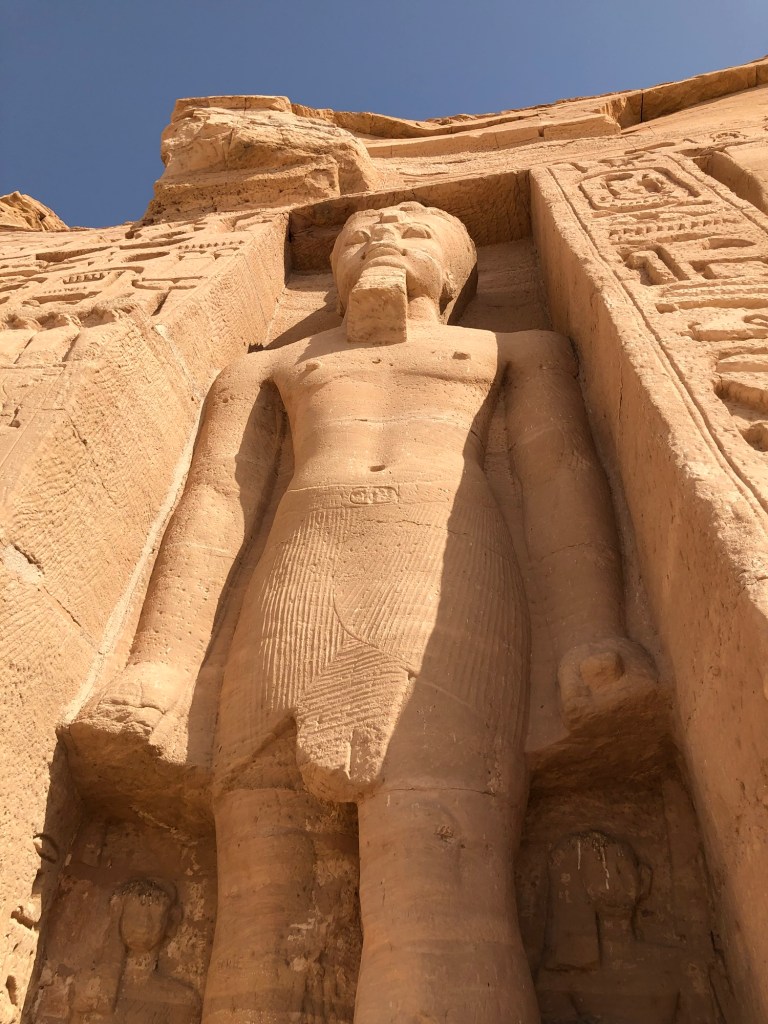
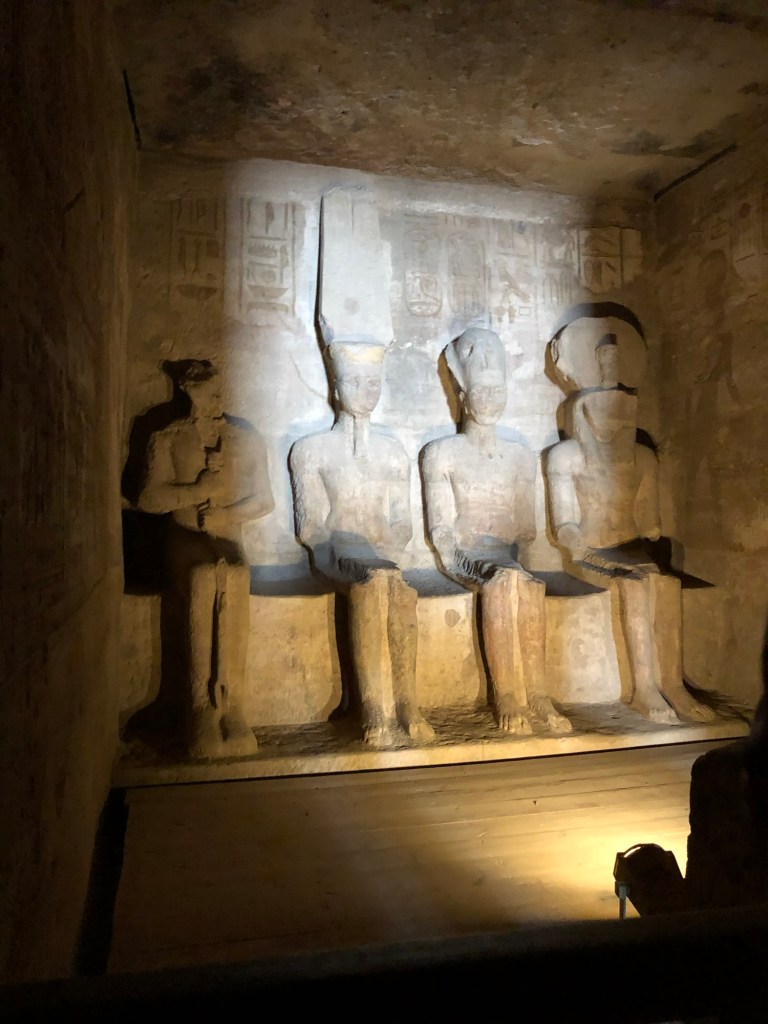
I have two favorite things about Abu Simbel. One includes the sacred sanctuary at the back of the Great Temple. The Egyptians built the temple in such a manner that twice a year the sun would illuminate three of the four statues deep in the sanctuary. The three illuminated statues are those of Amun-Re, Re-Horakhty, and Ramesses II. The fourth statue is of the god Ptah, the god of the Egyptian underworld, and remains in darkness (pretty clever for the underworld). The dates of this illumination included February 22 (Ramesses II’s birthday) and October 22 (the day they celebrated his coronation). Awesome! To imagine how the ancient Egyptians figured out how to make this happen just boggles my mind.
If you notice, I said the dates WERE. Well, that leads to my second most favorite thing about Abu Simbel. Abu Simbel was cut apart and moved to a new location!
In the 1960s Egypt began construction on the Aswan High Dam, and this was going to put the temples under water. The historical significance of Abu Simbel created a need to find a way to preserve it. Otherwise, it would be buried in water. While many options were presented, the final decision was made—we’ve got to move it, move it!
As for moving Abu Simbel, the process took from 1964 until 1968. At the time it cost around $40 million USD, which converts to a total of over $300 million USD today. In all honesty, the undertaking was incredible. If you are as intrigued as me, you might enjoy this video. It not only shows how they moved Abu Simbel, but it also shows how they moved other temples such as Amada, the oldest temple, and Philae Temple in Aswan. Seriously, I still can’t believe it happened!
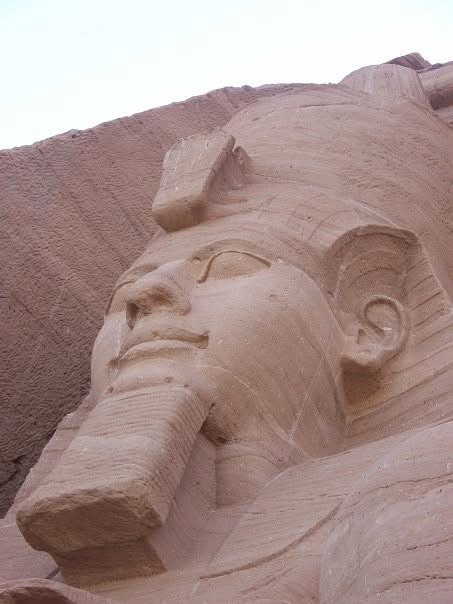
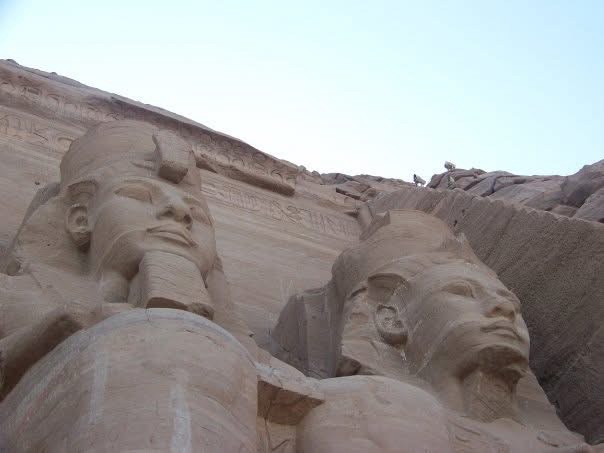
In my pictures, you can see the cut lines made for the movement of the temples. When I talk about these temples being moved, the reality was that a new area was built, higher than the original location that could support the temples. Engineers built the area above the mountainside to prepare the way. Now, the part I love to tell includes those two dates above–February 22 and October 22.
The engineers decided to situate the new location exactly as the old one had been. They placed the openings of the temples in the same direction, so the sunrise would again enter the door of the Great Temple and reach the back of the temple on on February 22 and October 22. However, with all the technology…all the math…all the equipment, the engineers could not replicate what the Egyptians had done. Their calculations put the sunrise and sunset a few days off. Many people might not appreciate that information, but gosh, I remain amazed at how precise and perfect the ancient construction had been and how difficult it was to replicate albeit with advanced technology.
While that information in itself creates a mic drop event, arriving at Abu Simbel also adds to the adventure. There are a few ways to arrive. My traveling partner, Jenny, and I arrived by cruise ship on my first visit. We booked a cruise behind the dam, and it allowed us to see the Temple of Amada as well as boat over to Abu Simbel.
Once our visit concluded, we caught a flight back to Aswan. We traveled in the heat of July, and the plane hit lots of turbulence on the way to Aswan. Jenny feared for her life, and I didn’t feel so great either. The man sitting next to Jenny had been a flight attendant for over 30 years. He kindly turned to Jenny and explained why the flight to Aswan had been so bumpy. When we finally arrived in Aswan, he admitted to Jenny that in the 30 years he had worked as a flight attendant, he had never been afraid–until sitting next to Jenny!
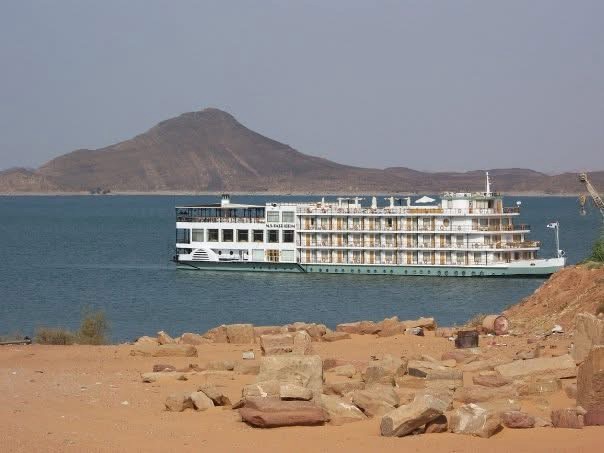
A few years later, my friend Kara, her mom Stephanie, and I traveled again to Abu Simbel. We had cruised on the other side of the dam, so we arrived in Aswan instead of cruising on Lake Nasser. This gave us the opportunity for an early morning ride.
We awoke at 3 AM and took a private car to Abu Simbel. There were some checkpoints as we went to Aswan, and at one stop, our guide spoke with the guard there. We thought nothing of it and continued on to the amazing Abu Simbel.
Upon our return, we stopped, and our guide let us know we were giving the guard a ride back to Aswan as his shift had ended and his car was not working. We were a bit shocked, but the ride was pleasant and that adventure gave us the opportunity to listen to the many things the guard and our guide said. We didn’t understand much, but it definitely created a fun story for our future.
Now, before I leave for today, I want to put in a plug. We used the company Egypt for Americans to travel through Egypt. Disclimer: this is the company my former husband and I began years ago. However, the service it provides beats any company I’ve used before. Because the company is a small, privately owned company, many guests have found that their unique desires could be met. So, if nothing else, check them out. I get no compensation for any referrals, but seriously, they are worth it.
As for me, I’m so thankful to have had an opportunity to visit Abu Simbel twice. I’d go all over again if I could! Just let me know if you’re heading there. I might meet you 😉.
 Reba Roams the World
Leave a comment